




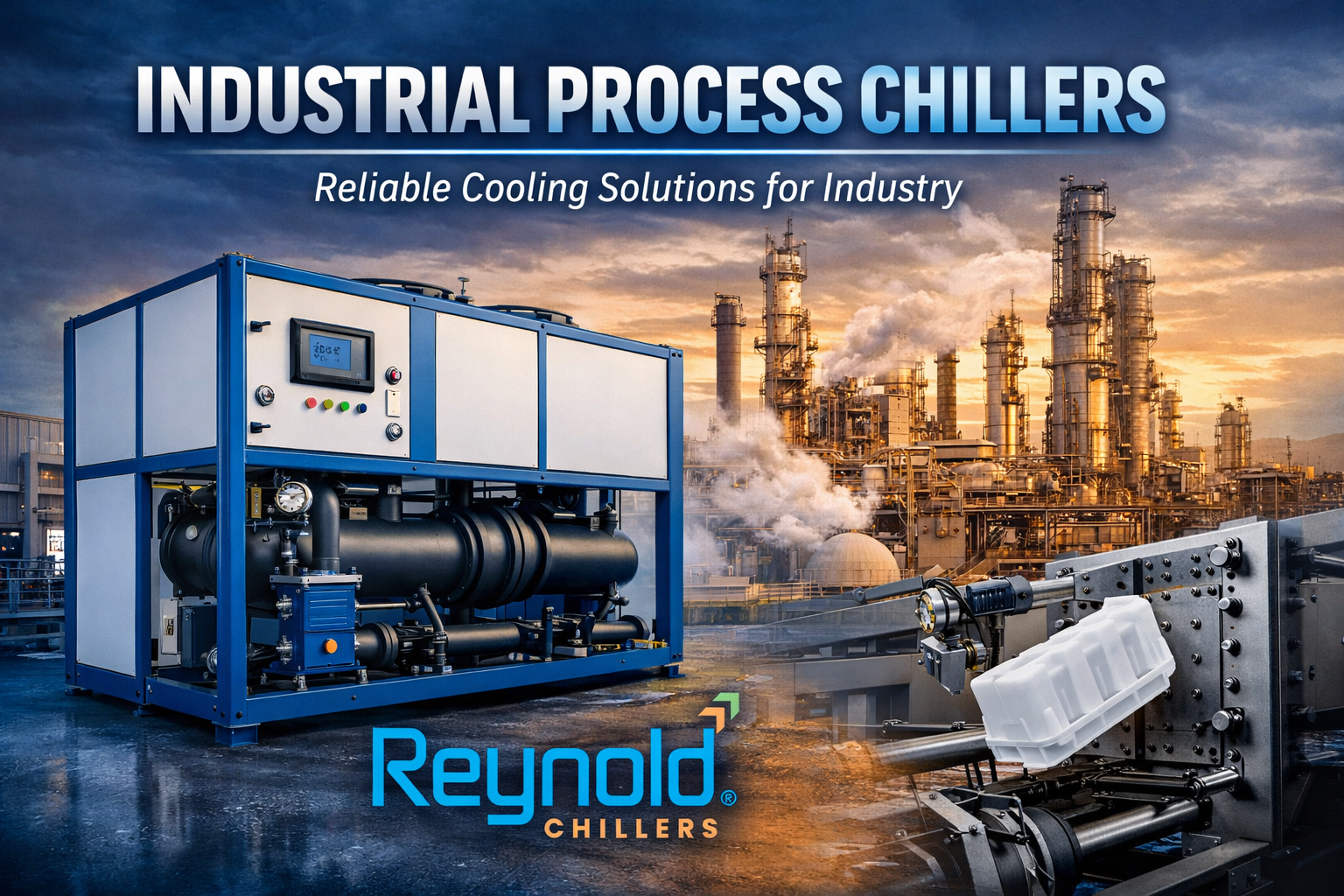
Industrial Process Chillers
In modern manufacturing, temperature control is not just a convenience—it is a necessity. From plastics and pharmaceuticals to food processing and metal fabrication, maintaining precise cooling conditions directly affects product quality, equipment life, and production efficiency. This is where industrial process chillers play a critical role.
At Reynold India, industrial process chillers are designed to support demanding applications where consistent cooling is essential for smooth and uninterrupted operations.
What Is an Industrial Process Chiller?
An industrial process chiller is a cooling system used to remove heat from machinery, industrial processes, or fluids. It circulates chilled water or coolant through equipment to maintain stable temperatures and prevent overheating.
Unlike comfort cooling systems used in buildings, process chillers are engineered to handle continuous operation under heavy industrial loads. They are built to deliver reliable performance even in challenging environments where precision and durability are essential.
Why Industrial Process Chillers Are Important
Industrial processes generate significant heat during operation. If this heat is not managed properly, it can lead to equipment damage, inconsistent production quality, and unexpected downtime.
A well-designed industrial process chiller helps in:
1. Maintaining Product Quality
Temperature fluctuations can affect material properties and product consistency. Stable cooling ensures uniform results in processes such as plastic molding, chemical reactions, and food production.
2. Improving Equipment Life
Excess heat puts stress on machinery components. Efficient cooling reduces wear and tear, helping extend the lifespan of critical equipment.
3. Enhancing Production Efficiency
Proper temperature control allows machines to run at optimal performance levels, reducing interruptions and increasing productivity.
4. Reducing Operational Downtime
Unexpected overheating can halt production. Reliable chillers minimize the risk of shutdowns and costly repairs.
Key Components of an Industrial Process Chiller
Understanding the basic components helps in appreciating how industrial chillers deliver consistent performance.
Compressor
The compressor is the heart of the chiller system. It circulates refrigerant through the system and helps remove heat from the process fluid.
Condenser
The condenser releases the absorbed heat into the surrounding environment. It plays a major role in maintaining cooling efficiency.
Evaporator
The evaporator absorbs heat from the process fluid, lowering its temperature before circulating it back into the system.
Expansion Valve
This component controls the flow of refrigerant and regulates pressure within the system.
Control System
Modern industrial chillers include user-friendly control panels that allow operators to monitor temperature settings and system performance.
Types of Industrial Process Chillers
Industrial operations require different cooling solutions depending on application needs. Some commonly used types include:
These chillers use ambient air to remove heat. They are easy to install and suitable for locations where water availability is limited.
Common Applications:
- Plastic molding units
- Packaging industries
- Printing operations
Water-cooled chillers use cooling towers to dissipate heat. They are known for higher efficiency and are suitable for large-scale operations.
Common Applications:
- Chemical plants
- Pharmaceutical manufacturing
- Heavy engineering industries
Screw Chillers
Designed for continuous and heavy-duty operations, screw chillers are widely used where stable and high-capacity cooling is required.
Common Applications:
- Centralized cooling systems
- Large manufacturing facilities
Scroll Chillers
Scroll chillers are compact and energy-efficient, making them suitable for medium-capacity industrial processes.
Common Applications:
- Food processing units
- Laboratory applications
Applications of Industrial Process Chillers
Industrial process chillers are widely used across multiple sectors due to their reliability and adaptability.
Plastic Industry
Cooling molds and machinery during injection molding ensures product accuracy and surface quality.
Pharmaceutical Industry
Maintaining controlled temperatures is essential for chemical stability and product safety.
Food and Beverage Industry
Chillers help maintain hygiene standards and preserve product freshness.
Chemical Industry
Precise cooling is required for safe chemical reactions and storage.
Metal Processing
Cooling systems prevent overheating during cutting, welding, and finishing operations.
Factors to Consider When Selecting an Industrial Process Chiller
Choosing the right chiller requires careful evaluation of operational requirements.
Cooling Capacity
Select a chiller that matches the heat load generated by the process.
Energy Efficiency
Energy-efficient chillers help reduce operating costs over time.
Ambient Conditions
Environmental factors such as temperature and humidity should be considered during selection.
Maintenance Requirements
Easy access to components simplifies servicing and reduces downtime.
Reliability and Build Quality
Durable construction ensures long-term performance in demanding industrial environments.
Benefits of Using Industrial Process Chillers from Reynold India
Industrial users require dependable cooling systems that can perform consistently under varying loads. Chillers designed with industry-specific requirements in mind offer several advantages:
- Stable and consistent cooling performance
- Energy-efficient operation
- Robust construction for industrial environments
- Easy operation and maintenance
- Long service life with reliable components
- Custom-built solutions based on application needs
Maintenance Tips for Long-Term Performance
Regular maintenance plays an important role in ensuring efficient chiller operation.
Recommended practices include:
- Inspecting refrigerant levels regularly
- Cleaning condenser coils to maintain efficiency
- Checking pumps and valves for smooth operation
- Monitoring temperature settings and alarms
- Scheduling preventive maintenance at regular intervals
Routine servicing helps prevent unexpected failures and keeps the system running at peak performance.
The Role of Industrial Process Chillers in Modern Manufacturing
As industries continue to expand and production demands increase, the need for reliable cooling systems becomes even more critical. Industrial process chillers support continuous operation, protect valuable equipment, and maintain consistent product quality.
A properly selected and well-maintained chiller system is not just a utility—it is an essential part of modern manufacturing infrastructure.
Conclusion
Industrial process chillers are an integral part of industrial operations where temperature control directly impacts productivity and product quality. From small manufacturing units to large industrial plants, the right cooling solution ensures smooth, efficient, and reliable performance.
With strong engineering practices and practical industry experience, Reynold India continues to support businesses with dependable industrial process chiller solutions designed for long-term reliability and operational efficiency.