





Gas Liquefier
Low Temperature Gas Liquefiers FOR CO2 , N2O etc...
(-)25°C
- Inverter Driven and Fixed Speed Both
- Compact
- Efficient
- Stepless & Variable Speed Capacity Control
- Fully PLC Controlled with MODBUS
- Pressure & Temperature on Transmitter








Options...
Gas Liquefaction Chillers
Industrial gas liquefaction requires precise temperature control, reliable refrigeration and equipment designed around the properties of the gas being processed. Gases such as carbon dioxide (CO₂) and nitrous oxide (N₂O) can be converted from gaseous to liquid form when the required pressure and temperature conditions are achieved. A properly engineered Gas Liquefaction Chiller provides the low-temperature refrigeration required for this process.
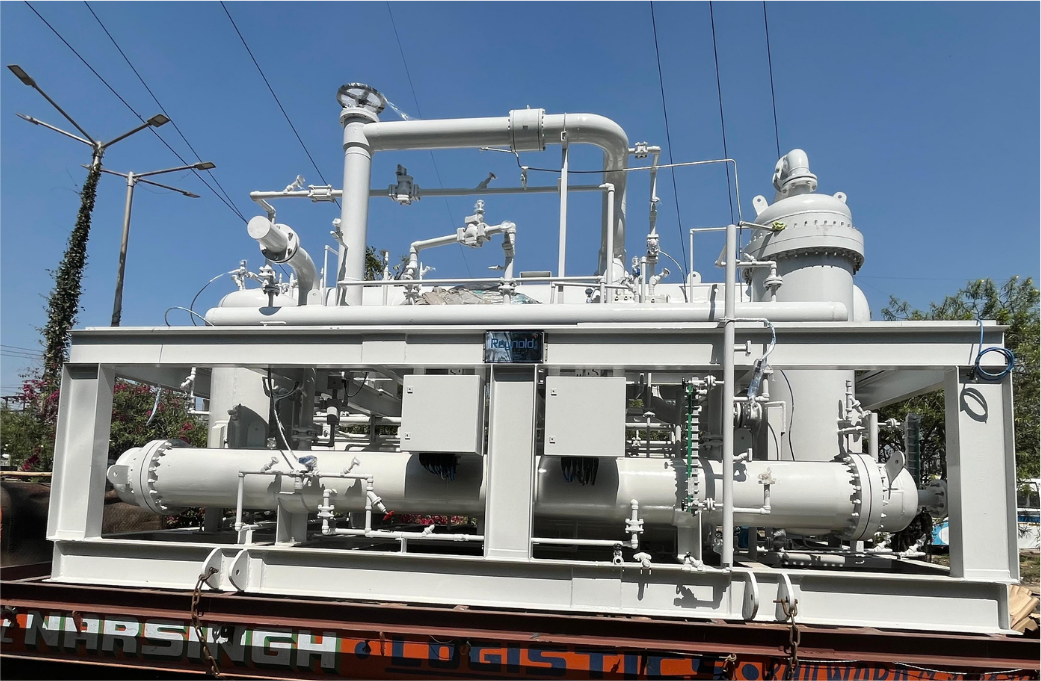
Reynold India designs and manufactures customized Gas Liquefaction Chillers and Gas Liquefiers for industrial gas applications. These systems are designed as complete skid-mounted packages and can include the gas-liquefying evaporator as part of the package. The refrigeration system can be configured with different refrigerants and equipment according to the process requirement. Reynold India's current product information identifies applications for gases including CO₂ and N₂O, with the product page listing operation down to approximately -25°C.
What Is a Gas Liquefaction Chiller?
A Gas Liquefaction Chiller is a specialized refrigeration system used to remove heat from an industrial gas until the gas reaches the temperature required for liquefaction under the specified operating pressure.
Unlike a conventional process water chiller, a gas liquefaction system is designed around the thermodynamic properties of the particular gas. The required temperature, pressure, flow rate, purity, phase-change characteristics and heat load all influence the final design.
In a typical system, the gas enters a specially designed heat exchanger or liquefying evaporator. Refrigeration is supplied to the evaporator, allowing heat to be removed from the gas. As the gas reaches its required saturation or liquefaction condition, it changes phase from gas to liquid.
The liquefied gas can then be collected, transferred or stored according to the process design.
Because the operating conditions can vary considerably between gases and applications, a gas liquefaction chiller is generally engineered as a customized refrigeration package rather than selected as a standard commercial chiller.
How Does Gas Liquefaction Work?
Gas liquefaction is fundamentally a controlled heat-removal process. A gas must be cooled to an appropriate temperature while being maintained at the pressure required by the process.
The refrigeration system generates the low-temperature cooling duty. The gas passes through the liquefying evaporator, where heat is transferred from the gas to the refrigeration circuit.
The refrigeration cycle normally includes a compressor, condenser, expansion device and evaporator. Depending on the design, screw or reciprocating compressor technology may be used.
The compressor raises the pressure of the refrigerant. The refrigerant then rejects heat through the condenser before passing through the expansion device. Its pressure and temperature decrease, allowing it to absorb heat from the gas in the liquefying evaporator.
This cycle continues to remove heat from the gas until the desired liquefaction condition is reached.
Reynold India Gas Liquefaction Chillers
Reynold India's Gas Liquefaction Chillers are specially designed for industrial gases such as CO₂ and N₂O. The company describes the systems as completely skid mounted, including the gas-liquefying evaporator. Multiple refrigerants can be used according to the process requirements.
The system can be customized according to the process requirement, including matching metallurgy for the equipment and accessories.
The current product page identifies the system as a Low Temperature Gas Liquefier for CO₂, N₂O etc., with a listed operating temperature of approximately -25°C. It also lists inverter-driven and fixed-speed configurations, stepless and variable-speed capacity control, fully PLC-controlled operation with MODBUS and pressure and temperature transmitters.
Key Features of Gas Liquefaction Chillers
- Low-Temperature Operation: Gas liquefaction requires refrigeration at temperatures significantly below normal chilled-water applications. Reynold India's current page lists operation around -25°C, while its catalogue specifies gas temperatures of up to -30°C, depending on the application and configuration.
The actual process temperature should always be determined from the gas properties, pressure and required liquefaction conditions. - Skid-Mounted Construction: The gas liquefaction package is designed as a skid-mounted system. The package can include refrigeration equipment and the gas-liquefying evaporator.
A skid-mounted configuration can simplify transportation, installation and commissioning, particularly for industrial projects where packaged equipment is preferred. - Screw and Reciprocating Compressors: Reynold's published catalogue identifies screw and reciprocating compressors for its Gas Liquefaction Chillers. Compressor selection depends on the required refrigeration capacity, operating temperature, pressure conditions and process duty.
- Inverter and Fixed-Speed Options: The current product page lists both inverter-driven and fixed-speed configurations. An inverter-driven system can vary compressor speed according to the cooling requirement, while a fixed-speed configuration may be suitable for applications with relatively stable loads.
- Stepless and Variable-Speed Capacity Control: Gas liquefaction processes may experience changing production rates or refrigeration loads. Stepless or variable-speed capacity control allows the refrigeration system to respond more closely to actual process demand.
- PLC and MODBUS Control: The Gas Liquefier page lists fully PLC-controlled operation with MODBUS communication. Pressure and temperature transmitters are also included among the listed features.
These controls can help operators monitor important process parameters and integrate the refrigeration package with suitable plant automation systems. - High-Pressure Process Capability: Reynold India's current catalogue states that the gas liquefaction systems are designed for gas temperatures of up to -30°C and pressures of up to 100 bar, subject to the selected design and application.
This makes accurate engineering of the pressure-containing equipment, heat exchangers, piping, valves and instrumentation particularly important. - Special Metallurgy and Hazardous-Area Options: The catalogue identifies special metallurgy for equipment and accessories according to hazardous-area classifications. This is important because industrial gas plants can have specific material compatibility and area-classification requirements.
The final materials, electrical equipment and safety provisions should always be selected according to the gas properties, process conditions, site classification and applicable standards.
Applications of Gas Liquefaction Chillers
- CO₂ Liquefaction: Carbon dioxide is widely used in food processing, beverages, industrial processes, welding and other applications. Gas liquefaction systems can be used to convert CO₂ into liquid form for storage, transportation or further industrial use.
- N₂O Liquefaction: Nitrous oxide is another industrial gas that may require controlled liquefaction and storage. A dedicated gas liquefaction system can provide the refrigeration required for the specified process conditions.
- Industrial Gas Plants: Gas liquefaction systems can be integrated into industrial gas production and processing facilities where gases need to be cooled and converted into liquid form.
- Gas Storage and Distribution: Liquefied gases can often be stored and transported more efficiently than their gaseous counterparts. Gas liquefaction equipment can therefore form part of a larger storage and distribution system.
- Chemical and Process Industries: Certain chemical and process applications require low-temperature cooling for gas handling, condensation or phase-change processes. A customized gas liquefier can be engineered around the required process duty.
Advantages of a Customized Gas Liquefaction System
A customized system provides several important advantages for industrial gas applications:
- Designed around the actual gas properties
- Suitable for low-temperature process requirements
- Skid-mounted packaged configuration
- Screw and reciprocating compressor options
- Inverter-driven and fixed-speed configurations
- Stepless and variable-speed capacity control
- PLC-based automatic operation
- MODBUS communication
- Pressure and temperature monitoring
- Customized metallurgy options
- Suitable for specialized industrial applications
- Gas-liquefying evaporator integrated into the package
The actual performance of the system depends on gas composition, inlet temperature, pressure, flow rate, required liquid temperature, ambient conditions and refrigeration configuration.
How to Select the Right Gas Liquefaction Chiller?
Gas liquefaction equipment should be selected from detailed process information. The following parameters are particularly important:
- Gas type: The exact gas, purity and composition should be provided because different gases have different thermodynamic and material-compatibility requirements.
- Gas flow rate: The mass or volumetric flow rate determines the refrigeration duty and heat-exchanger requirement.
- Inlet temperature: The temperature of the incoming gas is required to calculate the total heat that must be removed.
- Operating pressure: Gas pressure strongly influences the liquefaction temperature and therefore the refrigeration design.
- Required outlet condition: Specify whether the process requires partial condensation, complete liquefaction or a particular liquid temperature.
- Required production rate: The required liquid-gas production rate is important for determining the chiller and liquefier capacity.
- Ambient conditions: Condensing conditions and overall refrigeration performance depend on site conditions.
- Hazardous-area classification: If the equipment is installed in a classified area, appropriate electrical and mechanical components must be selected.
- Material compatibility: Heat exchangers, vessels, piping, valves and seals must be selected according to the gas and operating conditions.
Safety and Engineering Considerations
Gas liquefaction systems operate under specialized temperature and pressure conditions. The design therefore needs careful consideration of pressure containment, relief protection, instrumentation, isolation, ventilation and material compatibility.
For hazardous or flammable gas applications, the electrical and mechanical equipment must be selected according to the applicable area classification and project standards.
Reynold India's catalogue specifically identifies special metallurgy and accessories according to hazardous-area classifications and also lists certification/marking options including ATEX, IECEx, NEMA, UL-US, ASME, CE and PED on the current Gas Liquefier product presentation. The exact certification applicable to a project should be confirmed during technical specification and quotation.
Why Choose Reynold India for Gas Liquefaction Chillers?
Reynold India has developed a portfolio of customized process refrigeration systems, including gas liquefaction chillers. The company describes its Gas Liquefaction Chillers as customized skid-mounted systems designed around specific process requirements and matching metallurgy.
Its broader industrial chiller portfolio includes specialized systems such as brine chillers, cascade low-temperature chillers, hydrogen filling-station chillers, medical equipment chillers and other customized refrigeration solutions.
For gas liquefaction applications, this process-oriented approach is important because the refrigeration system cannot be selected only from nominal cooling capacity. Gas properties, pressure, temperature, flow and required phase-change conditions all need to be considered.
Frequently Asked Questions
- What is a Gas Liquefaction Chiller? A Gas Liquefaction Chiller is a specialized low-temperature refrigeration system used to remove heat from an industrial gas until the required temperature and pressure conditions for liquefaction are achieved.
- Which gases can be liquefied using Reynold Gas Liquefiers? Reynold India's published information specifically mentions CO₂ and N₂O, along with other industrial gas applications depending on the process requirement.
- What is the operating temperature of the Gas Liquefier? The current product page lists approximately -25°C, while Reynold India's 2025 catalogue specifies gas temperatures of up to -30°C, depending on the system design.
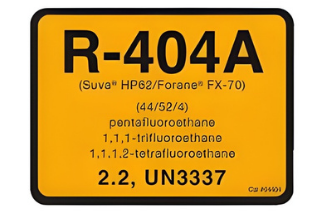
- What refrigerants are used? The current catalogue lists NH₃, R-404A and R-22 for the Gas Liquefaction Chiller range. The exact refrigerant should be selected according to the process temperature, capacity, regulations and project requirements.
- Can Gas Liquefaction Chillers handle high-pressure gas? Reynold India's catalogue states that the systems can be designed for gas pressures of up to 100 bar, subject to the selected design and application.
- Are Gas Liquefaction Chillers customized? Yes. The systems are designed according to specific process requirements, including gas properties, pressure, temperature, flow, metallurgy and hazardous-area requirements.
Gas Liquefaction Chiller Manufacturer in India
Gas liquefaction is a specialized refrigeration application where temperature, pressure and material selection must work together to achieve the required phase change safely and consistently. A standard industrial chiller may not be suitable for this duty because gas liquefaction requires a refrigeration system designed specifically around the gas and process conditions.
Reynold India Gas Liquefaction Chillers are designed as customized, skid-mounted systems for industrial gas applications such as CO₂ and N₂O. The published system features include low-temperature operation, screw or reciprocating compressors, inverter and fixed-speed options, variable capacity control, PLC/MODBUS automation, pressure and temperature monitoring and specialized metallurgy options.
For a project-specific Gas Liquefaction Chiller, the most important information to provide is the gas type and composition, inlet temperature, operating pressure, gas flow rate, required outlet/liquid condition, production capacity, ambient conditions and hazardous-area classification. With these parameters, the refrigeration and liquefaction package can be engineered around the actual process requirement.