





Hazardous Area Air Conditioners in Oil & Gas

(3kw to 70 kw)



Options...
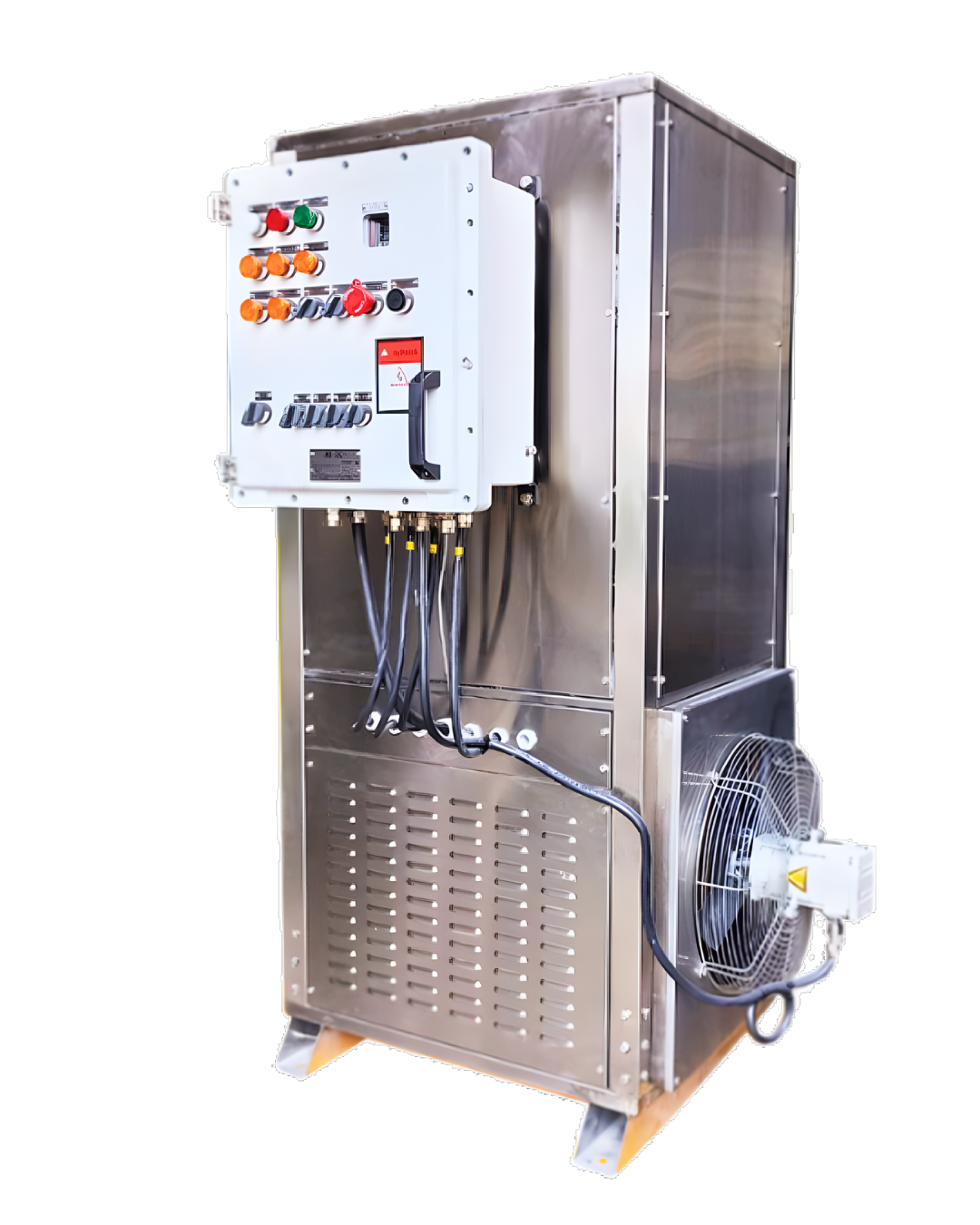
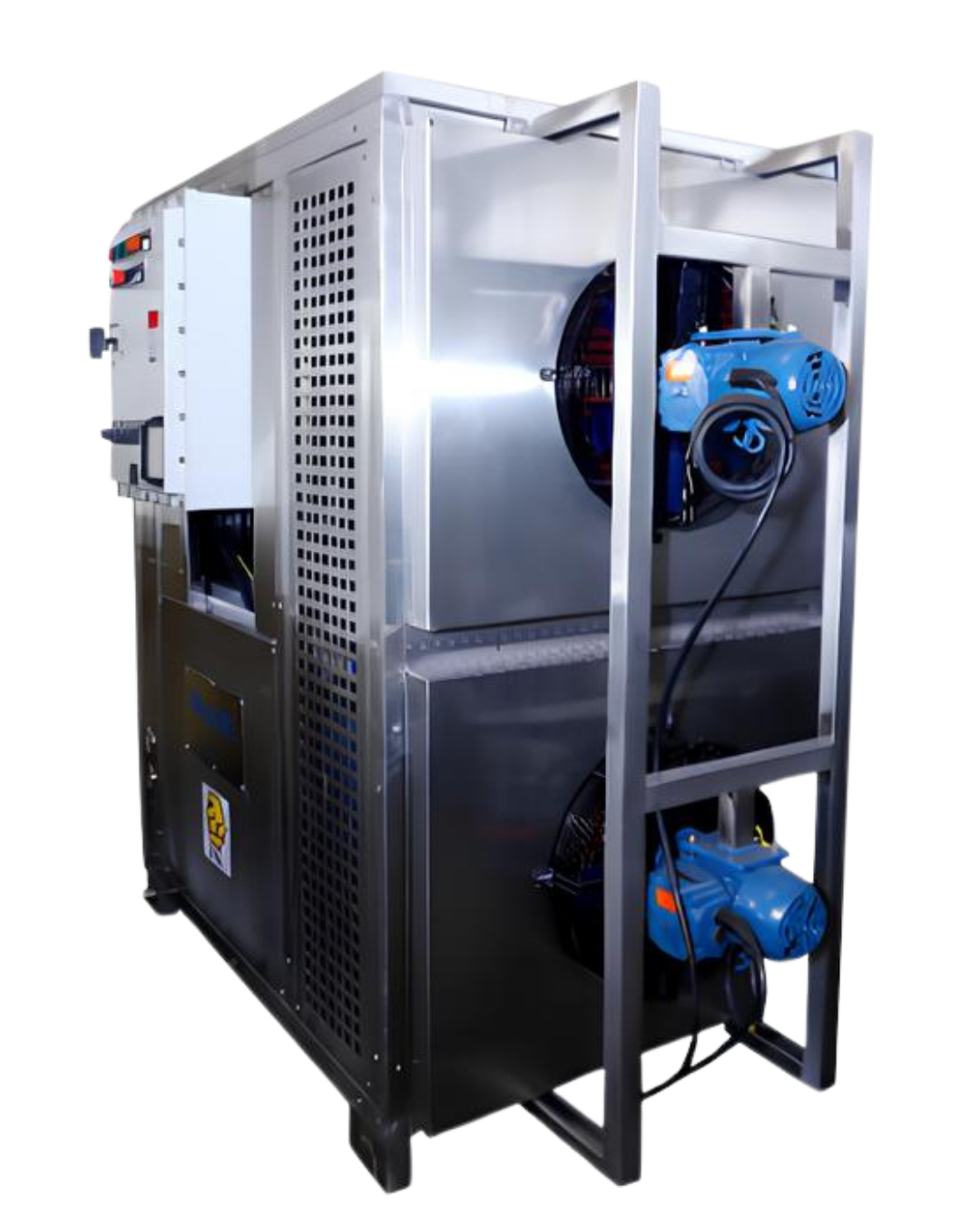
Explosion Proof Air Conditioners for Hazardous Areas
Explosion Proof Air Conditioners for Hazardous Areas are specially engineered HVAC systems designed to provide reliable temperature control in locations where flammable gases, vapours or other hazardous substances may be present. These environments require air-conditioning equipment that is designed around the applicable hazardous-area classification and suitable protection concepts rather than using a standard commercial air conditioner.
Reynold India offers customized Explosion Proof Air Conditioners for Hazardous Areas for demanding industrial applications, particularly in oil & gas, petrochemical and offshore environments. The current product range is listed with capacities from 3 kW to 70 kW, with references to ATEX, IECEx, NEMA, ASME and UL-US requirements. Refrigerant options shown on the product page include R-404A, R-134a, R-407C, R-410A, HFO and R-513A, depending on the selected configuration.
What Is an Explosion Proof Air Conditioner?
An explosion-proof air conditioner is an industrial air-conditioning system engineered for use in hazardous or classified locations. Its purpose is to maintain the required indoor temperature and comfort or equipment conditions while minimizing the possibility of an ignition source becoming a hazard in an area where flammable gases or vapours may occur.
In a normal air conditioner, electrical components such as motors, switches, relays, terminals and control equipment may not be suitable for hazardous locations. A hazardous-area air conditioner therefore requires careful selection of electrical and mechanical components, enclosure arrangements, controls and protection methods.
The exact design depends on the hazardous-area classification, gas group, temperature class, installation environment and applicable project standards.
Why Are Explosion Proof Air Conditioners Required?
Oil and gas plants, refineries, petrochemical facilities and offshore platforms can contain areas where combustible gases or vapours may be present. Maintaining suitable temperatures inside accommodation areas, equipment rooms and electrical or control modules can be essential for personnel comfort and equipment reliability.
A standard air conditioner may not be appropriate for installation in these locations because its electrical components can potentially become an ignition source.
An explosion-proof or appropriately certified hazardous-area air-conditioning system is designed to address these risks through suitable equipment selection and protection arrangements.
The objective is not only cooling. The complete system must be engineered to operate reliably while satisfying the requirements of the specific hazardous environment.
Hazardous Area Air Conditioner for Zone 1 and Zone 2
Hazardous-area classification is one of the most important factors when selecting an explosion-proof air conditioner.
Reynold India's related hazardous-area product information identifies systems for Zone 1 and Zone 2 applications. The company also describes explosion-proof air-conditioning systems for hazardous locations using purged and non-purged enclosure arrangements.
The required equipment should always match the classification specified by the project engineering team.
Zone classification, gas group, temperature class and certification requirements should be evaluated together before selecting the air-conditioning system. A unit suitable for one classification should not automatically be assumed to be suitable for another.
Explosion Proof AC for Oil & Gas Industry
Oil and gas facilities are among the most important applications for hazardous-area air conditioners.
These systems may be required in:
- Oil and gas processing plants
- Refineries
- Petrochemical plants
- Offshore oil platforms
- Gas processing facilities
- LNG-related facilities
- Compressor and equipment rooms
- Local equipment rooms
- Electrical and instrumentation rooms
- Control and accommodation modules
Reynold India's product information specifically identifies hazardous-area air conditioners as essential for petrochemical installations such as offshore oil and gas platforms. The systems are described as corrosion-protected and designed for demanding offshore environments.
Capacity Range
Reynold India's current product page lists a capacity range of approximately 3 kW to 70 kW for its hazardous-area air-conditioning offering.
The required capacity should not be selected only on the basis of room size. Industrial HVAC calculations should consider:
- Room dimensions
- Outdoor design temperature
- Internal heat load
- Equipment heat generation
- Number of occupants
- Solar heat gain
- Required indoor temperature
- Fresh-air requirements
- Insulation
- Door openings
- Operating schedule
- Location and installation conditions
For equipment rooms, electrical rooms and control rooms, the heat generated by installed equipment can be a major part of the total cooling load.
316 Stainless Steel Construction
Hazardous-area air conditioners installed in offshore and industrial environments may face corrosive atmospheres, humidity, salt-laden air and harsh operating conditions.
Reynold India's related product information describes units housed in a 316 stainless steel cabinet.
Stainless-steel construction can provide improved corrosion resistance and durability for demanding environments. The exact material grade and surface treatment should be selected according to the project environment and customer's specification.
For offshore applications, corrosion protection is particularly important because equipment is exposed to marine conditions for extended periods.
Purged and Non-Purged Systems
Hazardous-area air-conditioning equipment can use different protection concepts depending on the application.
Reynold India describes systems designed for both purged and non-purged enclosure systems.
In a purged enclosure arrangement, a controlled protective gas environment can be maintained within the relevant enclosure to prevent hazardous external gases from entering and reaching potential ignition sources.
A non-purged design uses appropriate certified or protected components without relying on enclosure purging.
The correct protection concept must be determined from the area classification, equipment certification and project requirements.
Refrigerants Used in Hazardous Area Air Conditioners
Refrigerant selection is an important part of the air-conditioning system design.
Reynold India's product page lists the following refrigerant options:
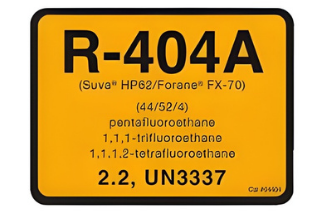
- R-404A
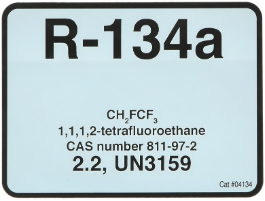
- R-134a
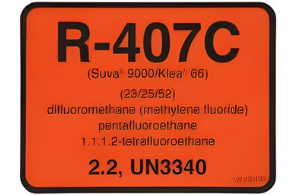
- R-407C
- R-410A
- HFO
- R-513A
The actual refrigerant used in a particular unit depends on the final design, cooling capacity, operating conditions, environmental requirements and customer specification.
Refrigerant selection should be considered together with compressor, condenser, evaporator, expansion device and control-system requirements.
Certifications and Standards
Hazardous-area HVAC systems may need to comply with specific international standards and certification requirements depending on the installation location.
Reynold India's product page displays references to ATEX, IECEx, NEMA, ASME and UL-US.
These standards and certifications should not be treated as interchangeable. Each project should identify the exact certification and compliance requirements applicable to the installation.
The final equipment documentation should clearly identify the certification applicable to the supplied configuration.
Applications of Explosion Proof Air Conditioners
Explosion-proof air conditioners can be used in a wide range of industrial and hazardous environments.
Typical applications include:
- Oil & Gas: For offshore platforms, refineries, gas processing plants and hydrocarbon facilities where hazardous-area classification applies.
- Petrochemical Plants: Used for maintaining controlled temperatures in equipment rooms, control modules and other designated areas.
- Chemical Plants: Suitable for locations where flammable or hazardous vapours may be present.
- Offshore Installations: Designed with corrosion protection and suitable construction for challenging marine environments.
- Local Equipment Rooms: Air conditioning can help maintain suitable operating conditions for electrical and process equipment installed in local equipment rooms.
- Electrical and Control Rooms: Temperature control can help maintain the required environmental conditions for sensitive electrical, instrumentation and control equipment.
Important Features
Depending on the final configuration, an Explosion Proof Air Conditioner may include:
- Hazardous-area suitable electrical components
- Flameproof or certified components
- Purged or non-purged enclosure options
- Corrosion-resistant construction
- Stainless-steel cabinet options
- Industrial-grade refrigeration components
- Advanced filtration
- Temperature monitoring
- Safety controls
- Protection systems
- Customized capacity
- Project-specific certification
The actual features depend on the customer's hazardous-area classification and technical specification.
Customized Explosion Proof Air Conditioners
Every hazardous-area project has different requirements. An offshore platform, refinery, petrochemical plant and chemical facility may have different ambient conditions, hazardous-area classifications and cooling requirements.
For this reason, a hazardous-area air conditioner should be engineered according to the complete application.
Important information required for system selection includes:
- Cooling capacity
- Indoor design temperature
- Outdoor ambient temperature
- Room dimensions
- Heat load
- Hazardous-area zone
- Gas group
- Temperature class
- Required certification
- Electrical supply
- Installation location
- Corrosion conditions
- Fresh-air requirement
- Control and monitoring requirements
This information allows the manufacturer and project engineering team to select a suitable configuration.
Why Choose Reynold India?
Reynold India specializes in industrial cooling, refrigeration and customized HVAC solutions and offers hazardous-area air conditioners as part of its Project Division.
The company states that its hazardous-area air-conditioning systems are manufactured according to customer specifications rather than simply modifying standard air conditioners after production. Its related product information also highlights customized solutions, engineering support and hazardous-area certifications.
This project-based approach is useful when the air conditioner needs to be integrated into an existing industrial facility or comply with detailed consultant, EPC or end-user specifications.
Frequently Asked Questions
- What is an Explosion Proof Air Conditioner? It is an air-conditioning system specially engineered for hazardous or classified areas where flammable gases or vapours may be present. Its components and protection arrangements are selected according to the applicable hazardous-area requirements.
- Where are explosion-proof air conditioners used? They are commonly used in oil and gas plants, refineries, petrochemical facilities, offshore platforms, chemical plants, gas-processing facilities and hazardous equipment rooms.
- What capacity range is available? Reynold India's current product page lists hazardous-area air conditioners from 3 kW to 70 kW. The required capacity depends on the actual cooling-load calculation.
- Can these air conditioners be used in Zone 1 and Zone 2? Reynold India's hazardous-area product information includes designs for Zone 1 and Zone 2 applications. The exact configuration and certification must be matched to the project classification.
- Are ATEX and IECEx certifications available? ATEX and IECEx are among the certification references shown by Reynold India for its hazardous-area products. The exact certification applicable to a supplied unit should be confirmed against the project specification.
- Can the air conditioner be customized? Yes. Hazardous-area air conditioners can be engineered according to cooling capacity, area classification, enclosure requirements, environmental conditions, materials, refrigerant and project-specific standards.
Get Explosion Proof Air Conditioners for Your Hazardous Area
Choosing an Explosion Proof Air Conditioner for a Hazardous Area requires much more than selecting a conventional AC based on cooling capacity. The hazardous-area classification, electrical protection, certification, gas group, temperature class, construction material, environmental conditions and cooling load must all be considered together.
Reynold India provides customized hazardous-area air-conditioning solutions for demanding industrial applications, with current product information covering 3 kW to 70 kW capacities and ATEX, IECEx, NEMA, ASME and UL-US references.
For oil & gas plants, refineries, petrochemical facilities, offshore platforms, chemical plants or other classified areas, Reynold India can evaluate the project requirements and develop a suitable hazardous-area air-conditioning configuration.