





Battery energy storage system
(BESS CHILLER)
60 KW




Options...
Battery Energy Storage System (BESS) Chiller
Battery Energy Storage Systems (BESS) are becoming an important part of modern energy infrastructure. As industries, renewable energy projects, data centres and power systems increasingly depend on battery storage, maintaining the correct operating temperature inside the battery system becomes an essential part of reliable operation.
A BESS Chiller is a specialized cooling system designed to provide controlled thermal management for battery energy storage systems. Batteries generate heat during charging, discharging and high-load operation. If this heat is not managed properly, battery performance, efficiency, operating life and system reliability can be affected. A properly selected cooling system helps maintain the battery system within its required operating temperature range.
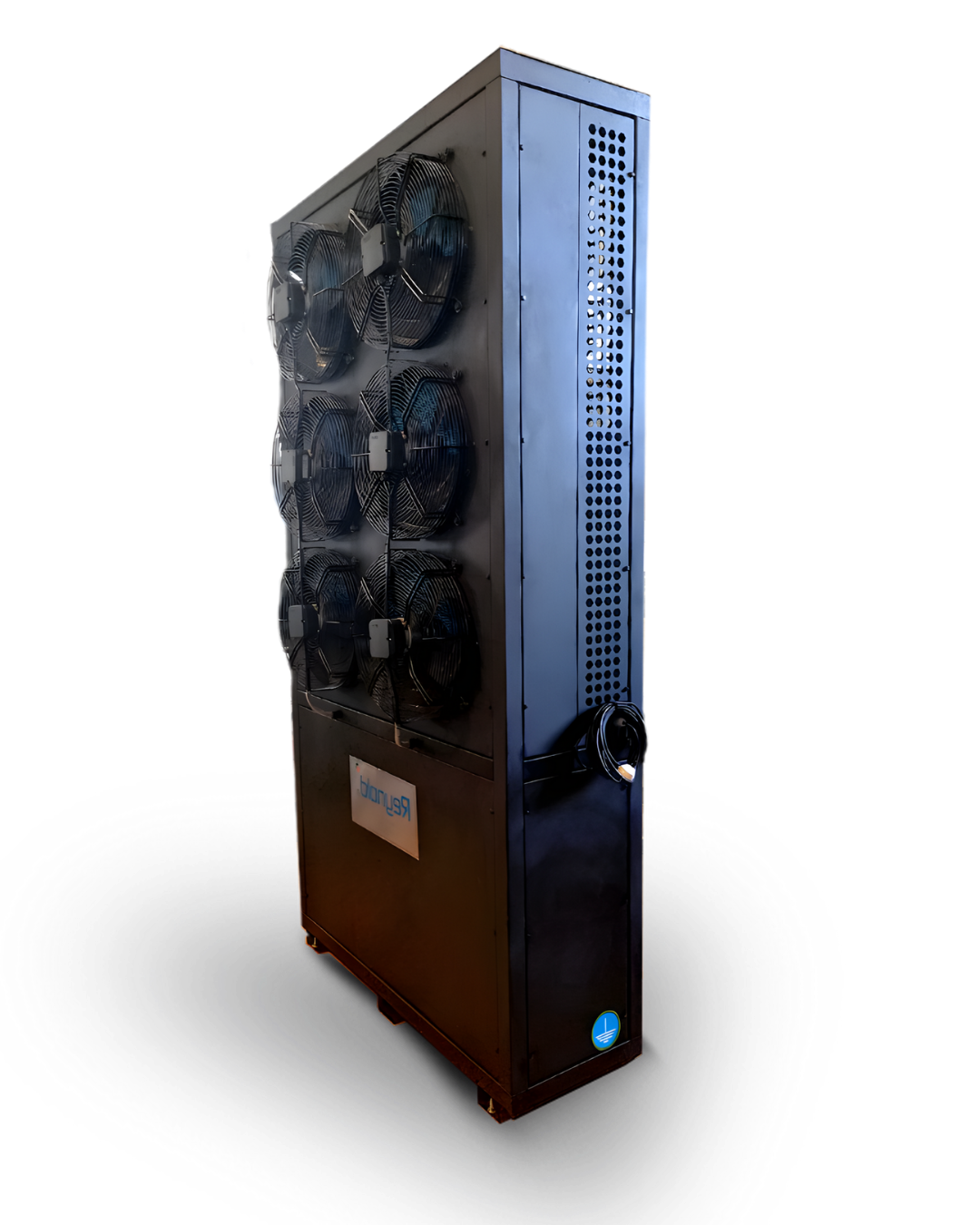
Reynold India provides BESS cooling solutions designed for battery energy storage applications. Its published BESS Chiller page currently lists a 60 kW cooling capacity and refrigerant options including R-134a, R-407C, R-410A, HFO and R-513A, depending on the selected configuration.
What Is a BESS Chiller?
A Battery Energy Storage System consists of battery modules, electrical equipment, battery management systems, power conversion equipment and associated controls. During operation, the batteries and electrical components produce heat. The amount of heat depends on factors such as battery chemistry, charge and discharge rate, ambient temperature, system size and operating conditions.
A BESS Chiller removes this unwanted heat and helps maintain a controlled thermal environment.
In a typical chilled-liquid cooling arrangement, the chiller cools a suitable fluid, which is then circulated through the battery thermal-management system. Heat from the battery modules is transferred to the cooling fluid. The warmed fluid returns to the chiller, where the heat is removed through the refrigeration cycle.
This continuous process allows the battery system to operate within its specified thermal conditions.
Why Is Cooling Important for Battery Energy Storage Systems?
Temperature has a direct influence on battery performance. Excessive heat can accelerate battery degradation and can affect charging and discharging performance. On the other hand, operating batteries outside their recommended low-temperature range can also affect performance and charging characteristics.
For large BESS installations, thermal management therefore needs to be considered as part of the overall system design rather than as an optional accessory.
A suitable BESS cooling system can help:
- Maintain more consistent battery operating temperatures
- Control heat generated during charging and discharging
- Support stable battery performance
- Reduce thermal stress on battery components
- Improve the operating environment for battery modules
- Support reliable operation of large energy storage installations
The actual temperature requirement should always be established from the battery manufacturer's specifications and the complete BESS design.
How Does a BESS Chiller Work?
The operation of a BESS chiller is based on the refrigeration cycle.
First, the chiller removes heat from the circulating cooling fluid through its evaporator. The cooled fluid is then supplied to the battery thermal-management circuit.
As the cooling fluid passes through the battery system, it absorbs heat generated by the battery modules and associated equipment. The warmer fluid returns to the chiller.
The refrigeration system then removes this heat from the returning fluid. The refrigerant absorbs the heat through the evaporator and subsequently transfers it to the condenser. In an air-cooled configuration, condenser fans reject the heat to the surrounding atmosphere.
The cooled fluid is continuously circulated back to the battery system.
The chiller controller can monitor important operating parameters and regulate the cooling system according to the required conditions.
Reynold India BESS Chiller
Reynold India's BESS Chiller is designed specifically for battery energy storage system cooling applications. The company's current product page lists the unit with a 60 kW capacity and identifies several refrigerant options, including R-134A, R-407C, R-410A, HFO and R-513A.
The appropriate configuration should be selected according to the battery system's thermal load, required coolant temperature, flow rate, ambient conditions and operating profile.
For larger BESS projects, the cooling requirement may be different from one installation to another. Therefore, the final chiller capacity and configuration should be established from the actual battery heat load and thermal-management design.
Key Considerations for BESS Cooling
- Cooling Capacity: The chiller must be capable of removing the heat generated by the battery system under the expected operating conditions.
Cooling capacity should not be selected only according to the nominal battery capacity in MWh. The actual thermal load depends on battery chemistry, electrical losses, charge/discharge rate, ambient conditions and the design of the battery thermal-management system. - Temperature Control: Consistent temperature control is important for battery operation. The required supply and return temperatures should be determined according to the battery manufacturer's recommended operating conditions.
- Cooling Fluid: Depending on the BESS design, the cooling circuit may use water, a glycol-water mixture or another specified heat-transfer fluid. Fluid selection should consider freezing protection, corrosion protection, heat-transfer performance and compatibility with the system components.
- Flow Rate: The required flow rate depends on the cooling capacity and temperature difference across the battery thermal-management circuit. Correct flow is important for effective heat transfer and uniform cooling.
- Ambient Conditions: For air-cooled chillers, ambient temperature has a significant effect on condenser performance. The chiller should therefore be selected according to the actual site design conditions, including the expected maximum ambient temperature.
Applications of BESS Chillers
- Renewable Energy Storage: Solar and wind power plants increasingly use battery storage to manage variable electricity generation. A BESS chiller can provide thermal management for battery systems installed alongside renewable energy projects.
- Grid Energy Storage: Utility-scale battery storage systems can be used for load management, grid support and energy shifting. Thermal management becomes increasingly important as the size and operating intensity of the battery installation increase.
- Commercial and Industrial Energy Storage: Factories, commercial facilities and large buildings may use BESS to manage peak demand, improve energy utilization and provide backup power. A dedicated cooling system can support the thermal requirements of the battery installation.
- Data Centres: Data centres depend on reliable backup power systems and may use large battery banks or energy storage systems. Thermal management can be integrated with the overall facility cooling strategy according to the battery system design.
- Microgrids: Microgrids combining renewable generation, battery storage and conventional power sources require coordinated energy management. BESS cooling systems can form part of the thermal-management infrastructure for the battery storage section.
- EV Charging Infrastructure: Large EV charging installations can experience high and rapidly changing electrical loads. Battery energy storage can be used as an energy buffer in some charging applications, creating a requirement for suitable battery thermal management.
Advantages of Dedicated BESS Cooling
A purpose-designed cooling system provides several benefits compared with relying only on general ambient ventilation.
- Controlled thermal conditions: A chiller can provide more controlled cooling than passive ventilation in applications with significant heat generation.
- Suitable for high-load operation: Battery systems can generate substantial heat during high-rate charging and discharging. Cooling capacity can be designed around these operating conditions.
- Improved system reliability: Maintaining suitable temperatures supports stable operation of the battery thermal-management system.
- Scalable engineering: Cooling systems can be selected or configured according to the size and thermal requirements of the BESS project.
- Integration with battery controls: The cooling system can be coordinated with the BESS thermal-management and control architecture where required.
How to Select a BESS Chiller?
Selecting the right BESS chiller requires technical information from the battery and thermal-management system supplier.
Important parameters include:
- Battery capacity: The total battery energy capacity in kWh or MWh provides useful project information, but it should not be used alone to determine chiller capacity.
- Maximum charge/discharge power: Higher C-rates and electrical loads can result in greater heat generation.
- Heat load: The estimated maximum thermal load should be calculated from the battery system and associated electrical equipment.
- Required coolant temperature: The supply and return temperature requirements should be established from the battery thermal-management system.
- Coolant flow rate: The required flow and pressure drop should be considered when selecting the chiller and pump arrangement.
- Ambient temperature: The maximum and minimum site temperatures should be provided for proper equipment selection.
- Installation environment: Containerized BESS, indoor battery rooms and outdoor installations can have different cooling requirements.
- Control and communication: The chiller controls should be compatible with the overall BESS control architecture where communication and remote monitoring are required.
BESS Chiller Manufacturer in India
Reynold India develops industrial cooling systems for specialized applications, and its product portfolio includes a dedicated Battery Energy Storage System / BESS Chiller. The current product page identifies the BESS Chiller as a 60 kW cooling unit and lists multiple refrigerant options.
For BESS projects, the cooling system should be engineered around the actual thermal load rather than selecting a chiller solely from the battery's electrical storage capacity. Factors such as charge/discharge profile, battery chemistry, coolant temperature, flow rate, ambient conditions and installation configuration all influence the final selection.
Reynold India can therefore be considered for project-specific BESS cooling requirements where controlled thermal management is required for battery energy storage installations.
Frequently Asked Questions
- What is a BESS Chiller? A BESS Chiller is a cooling system designed to remove heat generated by a Battery Energy Storage System and maintain the battery thermal-management circuit within its required operating conditions.
- Why does a Battery Energy Storage System need cooling? Battery cells and associated electrical components generate heat during operation. Controlled cooling helps manage this heat and supports stable operation within the manufacturer's specified temperature range.
- What is the capacity of Reynold India's BESS Chiller? The current Reynold India product page lists a 60 kW BESS Chiller.
- Which refrigerants are available for the BESS Chiller? The published page lists R-134A, R-407C, R-410A, HFO and R-513A as refrigerant options. The appropriate refrigerant should be confirmed for the selected model and project requirements.
- Can a BESS Chiller be used for large battery storage projects? Yes, cooling requirements for large BESS installations can be engineered according to the project's actual thermal load. The final chiller capacity and configuration should be determined from the battery system and thermal-management design.
- How is BESS chiller capacity calculated? The capacity is determined from the heat generated by the battery and associated equipment under the expected operating conditions. Battery size in MWh alone is not sufficient; charge/discharge power, efficiency losses, ambient conditions and thermal-management requirements should also be considered.
Choose a BESS Cooling Solution from Reynold India
Battery energy storage is becoming increasingly important for renewable energy integration, industrial power management, backup power and modern electrical infrastructure. As battery systems become larger and operate at higher power levels, effective thermal management becomes an important part of overall system reliability.
A Battery Energy Storage System Chiller provides controlled cooling for the battery thermal-management circuit and helps manage heat generated during charging and discharging.
Reynold India's BESS Chiller range provides a dedicated cooling solution for this application, with the current published model listed at 60 kW and multiple refrigerant options available.
For correct chiller selection, customers should provide the battery capacity, maximum charge/discharge power, estimated heat load, required coolant temperature, flow rate, ambient temperature and installation details. These parameters allow the cooling system to be matched accurately with the BESS application.