



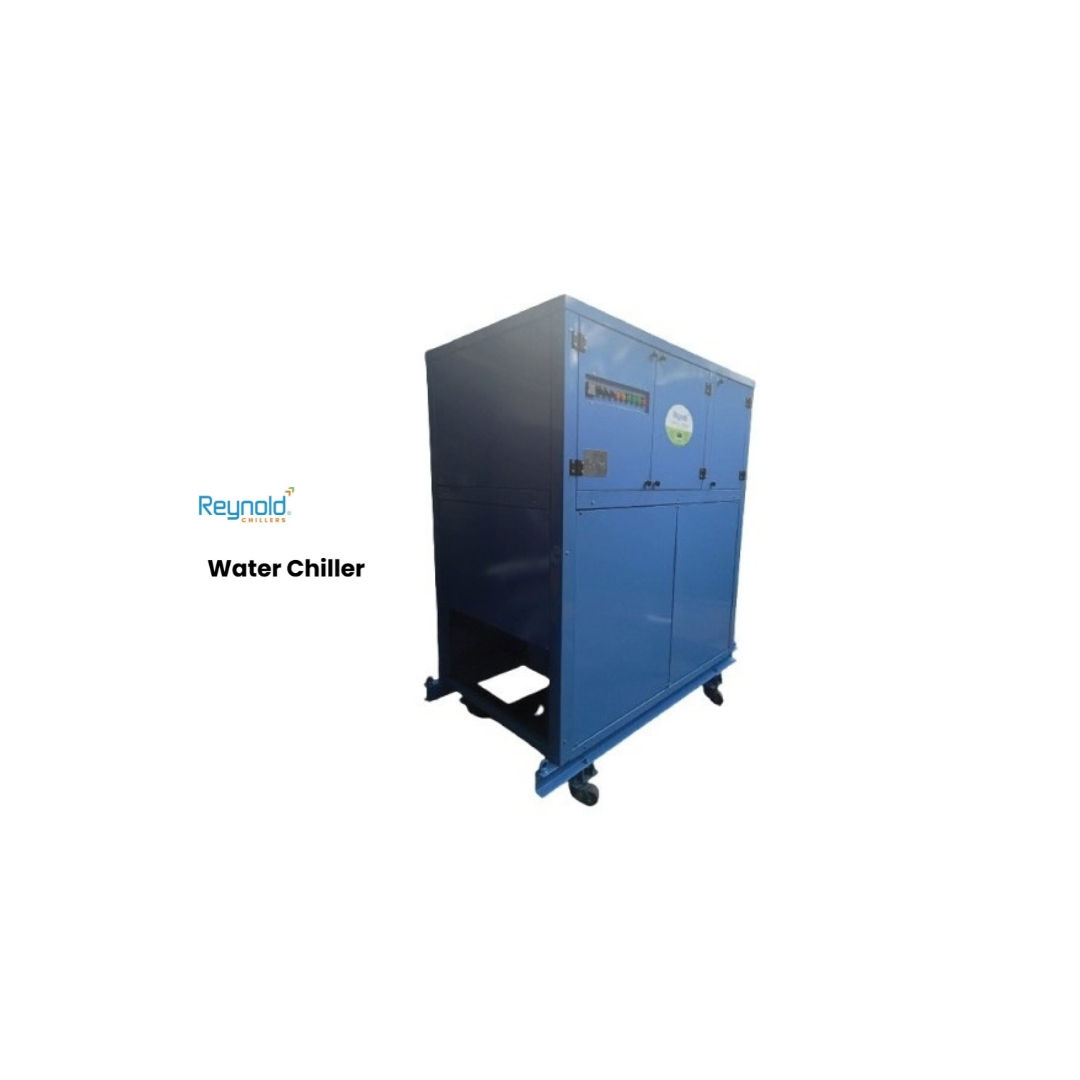
Water Chiller: Types, Uses and Applications
In modern industrial and commercial environments, maintaining the right temperature is essential for efficient operations, product quality, and equipment reliability. A water chiller is a refrigeration system designed to remove heat from water or another process fluid and circulate the cooled fluid through industrial machinery, HVAC systems, and process applications.
From manufacturing plants and pharmaceutical facilities to food processing units and commercial buildings, water chillers play an important role in temperature control. They help industries maintain consistent operating conditions while improving productivity and protecting temperature-sensitive equipment.
Reynold India Pvt. Ltd. manufactures industrial cooling solutions designed to meet the diverse requirements of modern industries. With the right water chiller, businesses can achieve dependable cooling performance, improved process control, and efficient heat management.
What Is a Water Chiller?
A water chiller is a refrigeration-based cooling system that transfers heat from water to a refrigerant and ultimately rejects that heat to the surrounding environment. The chilled water is then circulated through pipes to cool machinery, processes, rooms, or other equipment.
A typical water chiller consists of several key components, including:
Compressor
Condenser
Expansion valve
Evaporator
Refrigerant circuit
Water circulation system
Control and monitoring system
The chiller continuously removes heat from the circulating water. The cooled water is then supplied to the required application, where it absorbs heat before returning to the chiller for another cooling cycle.
Depending on the application, required cooling capacity, installation environment, and energy-efficiency requirements, different types of chillers can be selected.
How Does a Water Chiller Work?
The operating principle of a water chiller is based on the refrigeration cycle.
First, warm process water enters the chiller’s evaporator. The refrigerant absorbs heat from the water, causing the water temperature to decrease. The cooled water is then circulated back to the industrial process or cooling system.
The refrigerant, after absorbing heat, moves toward the compressor. The compressor increases its pressure and temperature before sending it to the condenser. At the condenser, the refrigerant releases the absorbed heat.
The refrigerant then passes through an expansion valve, where its pressure and temperature decrease. It returns to the evaporator, and the cycle starts again.
This continuous process allows the chiller to provide a stable supply of chilled water for temperature-sensitive applications.
Types of Water Chillers
Water chillers can be classified according to their heat-rejection method, configuration, capacity, and application.
1. Air-Cooled Water Chiller
An air-cooled chiller uses ambient air to remove heat from the refrigerant through condenser coils and fans.
These chillers are often selected where water availability is limited or where a cooling tower is not practical. They generally have a relatively straightforward installation because they do not require a separate condenser-water circuit.
Common advantages include:
Simple installation
No cooling tower required
Lower water consumption
Suitable for many commercial and industrial installations
Air-cooled chillers can be useful for facilities where ease of installation and reduced water usage are important considerations.
2. Water-Cooled Water Chiller
A water-cooled chiller uses water to remove heat from the refrigerant in the condenser. The condenser water is typically connected to a cooling tower or another heat-rejection system.
Water-cooled systems are commonly used in larger industrial and commercial facilities where high cooling capacity and continuous operation are required.
Key benefits include:
Effective heat rejection
Suitable for larger cooling loads
Efficient operation in appropriate conditions
Well suited to continuous industrial processes
However, water-cooled systems require additional infrastructure, such as condenser-water pumps and cooling towers, and need appropriate water treatment and maintenance.
3. Scroll Chiller
Scroll chillers use scroll compressors and are generally suitable for small- to medium-capacity cooling requirements. They can be used in commercial facilities, process cooling applications, and other installations where compact and reliable cooling is required.
4. Screw Chiller
Screw chillers use screw compressors and are commonly selected for medium- to large-capacity applications. They are well suited to industrial environments requiring continuous and dependable cooling.
Their robust design makes them suitable for demanding applications where consistent cooling performance is important.
5. Reciprocating Chiller
Reciprocating chillers use piston-type compressors. Although other compressor technologies are increasingly common, reciprocating systems can still be suitable for certain industrial and specialized applications.
The selection depends on factors such as cooling capacity, operating conditions, required temperature, and system configuration.
Uses of Water Chillers
Water chillers are used in a wide range of industries because controlled cooling is essential for many manufacturing and processing operations.
1. Plastic Manufacturing
In plastic injection moulding and extrusion processes, temperature control can directly influence product quality and cycle time. Chilled water can be used to cool moulds, hydraulic systems, and process equipment.
A properly sized chiller helps maintain consistent temperatures and supports stable production.
2. Pharmaceutical Industry
Pharmaceutical manufacturing often requires controlled environmental and process conditions. Chillers can provide cooling for process equipment, HVAC systems, storage areas, and temperature-sensitive manufacturing operations.
Reliable temperature control is particularly important where product quality and process consistency are critical.
3. Food and Beverage Industry
Food processing and beverage manufacturing frequently require cooling during production, storage, and processing. Chillers can be used to cool process water, machinery, tanks, and other equipment.
Maintaining appropriate temperatures can support product quality and efficient production.
4. Chemical Industry
Chemical manufacturing processes may generate significant amounts of heat. Chillers can help remove this heat and maintain process temperatures within specified operating limits.
Depending on the application, chilled water may be used for reactor cooling, heat exchangers, machinery, or other process equipment.
5. HVAC and Building Cooling
Water chillers are widely used in central HVAC systems for commercial buildings, hospitals, hotels, shopping centres, and institutional facilities.
The chiller produces chilled water that circulates through air-handling units or fan-coil systems. The chilled water absorbs heat from indoor air, helping maintain comfortable indoor temperatures.
6. Data Centres
Data centres generate substantial heat from servers and IT equipment. Reliable cooling is essential to maintain operating conditions and prevent equipment overheating.
Chilled-water systems can form part of the cooling infrastructure in large data centres where stable and continuous temperature control is required.
7. Metal and Engineering Industries
Manufacturing machinery and metalworking processes can generate considerable heat. Chillers can be used to cool machine tools, hydraulic systems, laser equipment, welding equipment, and other industrial machinery.
Applications of Water Chillers
Water chillers can be integrated into numerous processes and systems, including:
Process cooling
Injection moulding
Extrusion cooling
Machine tool cooling
Laser and welding equipment cooling
HVAC systems
Pharmaceutical processing
Food and beverage processing
Chemical processing
Data centre cooling
Printing machinery
Electronics manufacturing
Textile machinery
Laboratory and testing equipment
The appropriate chiller should be selected according to the required cooling capacity, entering and leaving water temperatures, ambient conditions, operating hours, fluid characteristics, and installation requirements.
Benefits of Using a Water Chiller
A properly selected water chiller can provide several operational benefits.
Consistent Temperature Control
Maintaining a stable process temperature can improve product consistency and process reliability.
Improved Equipment Performance
Excessive heat can negatively affect machinery. Effective cooling helps equipment operate within its recommended temperature range.
Better Process Efficiency
Temperature-controlled processes can operate more consistently, helping industries improve production efficiency.
Reduced Production Issues
In applications where heat affects product quality, reliable cooling can help reduce temperature-related defects and process interruptions.
Flexible Industrial Applications
Water chillers can be designed and configured for a broad range of cooling requirements, from relatively small processes to large industrial installations.
How to Choose the Right Water Chiller
Choosing a water chiller requires careful evaluation of the application rather than simply selecting a unit based on nominal capacity.
Important factors include:
Cooling Capacity: Determine the amount of heat that needs to be removed from the process.
Required Water Temperature: Establish the required supply and return water temperatures.
Operating Conditions: Consider ambient temperature, operating hours, seasonal variations, and process conditions.
Chiller Type: Decide whether an air-cooled or water-cooled system is more suitable for the facility.
Energy Efficiency: Evaluate compressor technology, controls, heat-exchanger performance, and overall operating costs.
Space Availability: Consider the footprint and installation requirements of the chiller and associated equipment.
Maintenance Requirements: Select a system that can be maintained efficiently with appropriate access to critical components.
Working with an experienced chiller manufacturer can help ensure that the system is correctly sized and configured for the intended application.
Why Choose Reynold India Pvt. Ltd.?
Selecting the right cooling equipment is an important decision for any industrial facility. Reynold India Pvt. Ltd. focuses on manufacturing cooling solutions for industrial and process applications.
A suitable chiller solution should balance cooling performance, reliability, energy consumption, operating conditions, and maintenance requirements. Reynold India’s industrial expertise can help businesses identify cooling solutions aligned with their specific process requirements.
Whether the requirement involves manufacturing machinery, process cooling, HVAC, or another industrial application, choosing a correctly designed and appropriately sized water chiller can contribute to dependable long-term operation.
Conclusion
Water chillers are an essential part of temperature-control systems across modern industries. By continuously removing heat and supplying chilled water, they help maintain stable operating conditions, protect equipment, and support consistent manufacturing processes.
From plastic manufacturing and pharmaceuticals to food processing, chemical production, HVAC, data centres, and engineering applications, water chillers offer a flexible and effective method of industrial cooling.
The right system depends on several factors, including cooling capacity, temperature requirements, application type, operating environment, energy efficiency, and maintenance needs. Therefore, businesses should evaluate their specific requirements before selecting a chiller.
With an appropriately designed cooling system and reliable manufacturing partner such as Reynold India Pvt. Ltd., industries can achieve effective temperature management and dependable cooling performance.
Frequently Asked Questions (FAQs)
1. What is a water chiller used for?
A water chiller is used to remove heat from water or another process fluid and provide cooling for industrial machinery, manufacturing processes, HVAC systems, and temperature-sensitive equipment.
2. What are the main types of water chillers?
The main types include air-cooled and water-cooled chillers. Chillers can also be categorized according to compressor technology, such as scroll, screw, and reciprocating chillers.
3. What is the difference between an air-cooled and water-cooled chiller?
An air-cooled chiller rejects heat to the surrounding air, while a water-cooled chiller uses water to remove heat from the refrigerant. Water-cooled systems generally require additional infrastructure such as cooling towers and condenser-water circuits.
4. Which industries use water chillers?
Water chillers are used in industries such as plastics, pharmaceuticals, food and beverages, chemicals, engineering, electronics, textiles, printing, HVAC, and data centres.
5. How does a water chiller cool water?
The chiller uses a refrigeration cycle. Refrigerant absorbs heat from the circulating water through the evaporator. The heat is then transferred through the refrigerant circuit and rejected through the condenser.
6. How do I select the right water chiller?
Selection depends on cooling capacity, required inlet and outlet water temperatures, ambient conditions, operating hours, application requirements, installation space, and energy-efficiency considerations.
7. Why is proper chiller sizing important?
An incorrectly sized chiller may result in inefficient operation, inadequate cooling, unnecessary energy consumption, or excessive cycling. Proper sizing helps the system deliver the required cooling performance.
8. Can water chillers be used for process cooling?
Yes. Water chillers are widely used for process cooling in manufacturing and industrial applications, including mould cooling, machinery cooling, chemical processes, and temperature-sensitive production systems.
9. How can water chiller efficiency be maintained?
Regular maintenance, proper water treatment where applicable, cleaning heat-transfer surfaces, checking refrigerant and operating conditions, maintaining pumps and controls, and keeping the system correctly loaded can help maintain performance.
10. Why choose an industrial water chiller manufacturer?
An experienced manufacturer can help evaluate the process requirements, determine the appropriate cooling capacity and configuration, and provide a system suited to the operating environment and application. Follow-us