




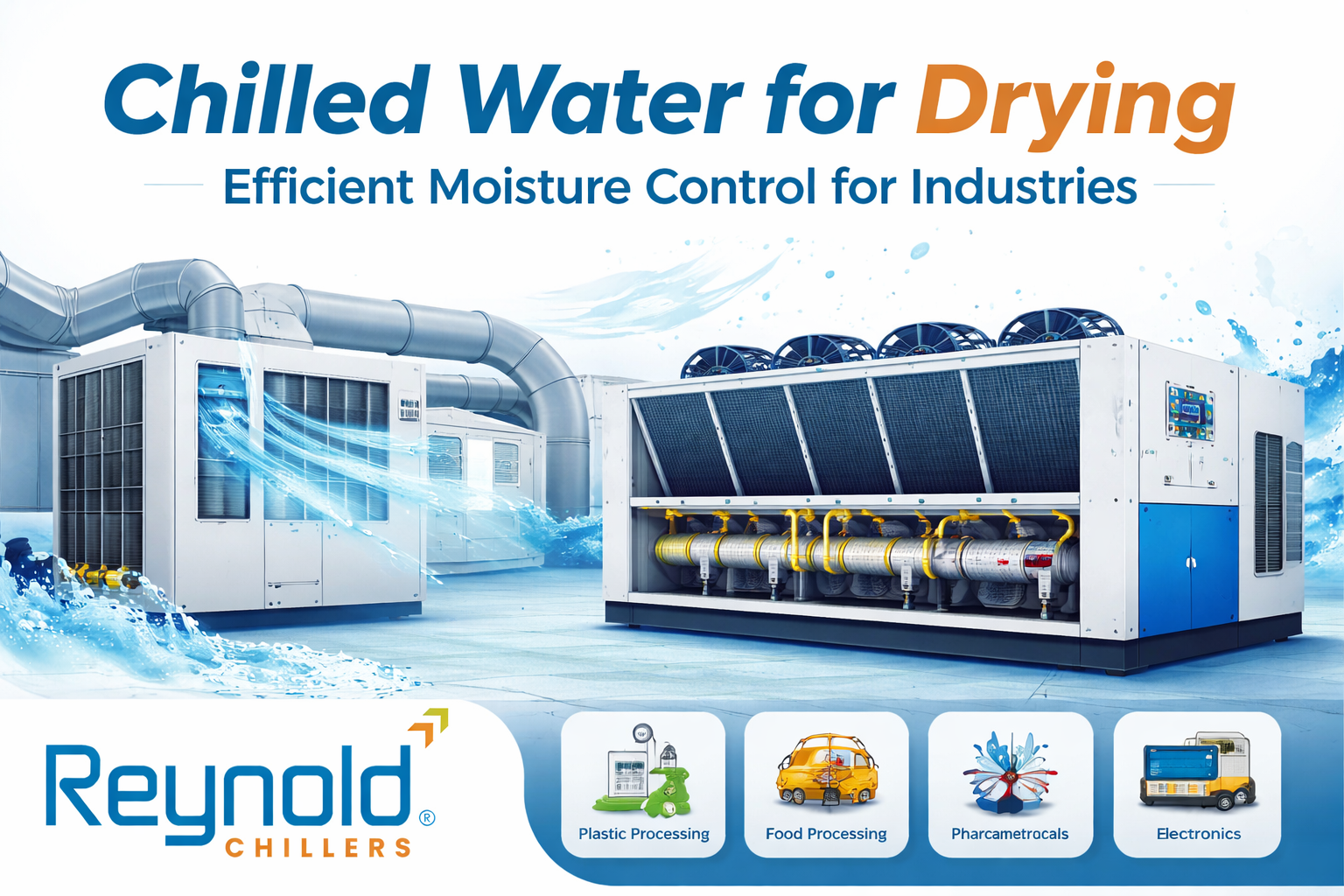
Chilled Water for Drying
In many industrial processes, controlling moisture is not just important—it is critical to maintaining product quality, process efficiency, and equipment longevity. One of the most effective and widely used methods for moisture removal is chilled water-based drying systems.
At Reynold India, we understand the practical challenges industries face when it comes to drying applications, especially in environments where precision and consistency are required. Chilled water systems provide a dependable and energy-efficient solution across multiple sectors.
What is Chilled Water Drying?
Chilled water drying works on a simple but effective principle—cooling air to remove moisture. When warm, moisture-laden air passes over a cooling coil supplied with chilled water, the temperature of the air drops. As the air cools below its dew point, moisture condenses and is removed from the air stream.
The result is dry, controlled air that can be used in various industrial processes.
Why Use Chilled Water for Drying?
Industries prefer chilled water systems for drying due to their consistency and scalability. Unlike standalone refrigerant-based systems, chilled water systems can serve multiple applications from a central setup.
Key advantages include:
- Consistent drying performance even in high humidity conditions
- Energy efficiency in large-scale operations
- Centralized control for multiple process lines
- Low maintenance compared to distributed systems
- Better temperature control, which protects sensitive products
Industrial Applications
Chilled water drying is used across a wide range of industries, including:
- Plastic and Polymer Processing
Moisture removal is essential before molding or extrusion to avoid defects. - Pharmaceutical Manufacturing
Controlled drying ensures product stability and compliance with quality standards. - Food Processing
Helps maintain hygiene and prevents microbial growth by controlling humidity. - Chemical Industries
Prevents reactions caused by excess moisture and ensures process safety. - Electronics and Electrical Components
Protects sensitive components from condensation and corrosion.
How the System Works
A typical chilled water drying setup includes:
- Chiller Unit – Produces chilled water at a controlled temperature
- Cooling Coil / Air Handling Unit (AHU) – Transfers cooling to the air
- Blower System – Circulates air across the cooling surface
- Moisture Drain System – Removes condensed water
- Control System – Maintains temperature and humidity levels
The integration of these components ensures efficient moisture removal and stable operation.
Choosing the Right System
Selecting the right chilled water drying system depends on several factors:
- Required drying capacity
- Ambient conditions
- Type of material or product
- Space availability
- Energy consumption targets
At Reynold India, we focus on understanding these parameters before recommending a solution. A properly designed system not only improves drying efficiency but also reduces operational costs over time.
Why Reynold India?
Reynold India offers customized chilled water solutions designed for real industrial needs. Our systems are built for durability, precision, and performance in demanding environments.
What sets us apart:
- Industry-focused design approach
- Reliable and robust system construction
- Efficient performance with optimized energy use
- Dedicated support for installation and operation
Conclusion
Chilled water drying remains one of the most effective and scalable methods for industrial moisture control. With the right system design and implementation, industries can achieve consistent drying results, improve product quality, and enhance overall process efficiency.
If your operations require dependable drying solutions, chilled water for Drying systems are a proven choice—and Reynold India is ready to support you with the right expertise and technology.