


Zone 2 HVAC System: Reliable Climate Control for Hazardous Environments
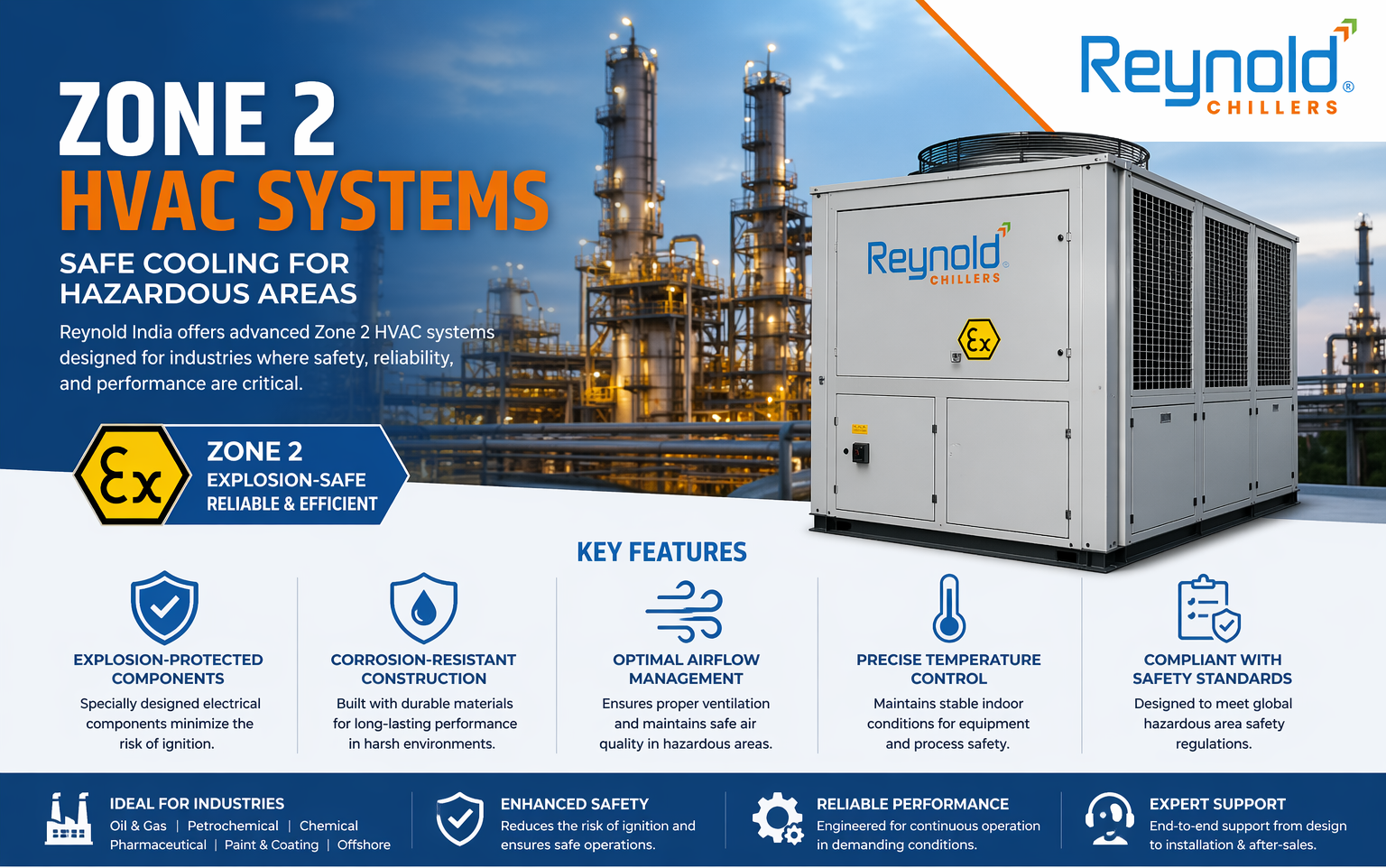
In industries where flammable gases, vapors, or dust may be present, maintaining safe and reliable climate control is critical. A Zone 2 HVAC System is specially designed to operate safely in hazardous areas where explosive atmospheres are not normally present but may occur occasionally. At Reynold India, we design and manufacture robust Zone 2 HVAC solutions that ensure safety, performance, and compliance with industry standards.
What is a Zone 2 HVAC System?
A Zone 2 HVAC System is engineered for use in classified hazardous areas where explosive gases are unlikely to occur during normal operation but may appear for short periods. These systems are built with specialized components that minimize the risk of ignition, ensuring safe operation in sensitive industrial environments.
Zone 2 areas are commonly found in industries such as:
- Oil & Gas Facilities
- Petrochemical Plants
- Chemical Processing Units
- Paint and Solvent Storage Areas
- Offshore Platforms
- Pharmaceutical Manufacturing Units
Using a standard HVAC system in these environments can pose significant safety risks. A certified Zone 2 HVAC system helps maintain temperature, air quality, and ventilation while meeting strict safety requirements.
Key Features of Zone 2 HVAC Systems
At Reynold India, Zone 2 HVAC systems are built with advanced engineering and safety-focused design. Some of the essential features include:
1. Explosion-Protected Components
Zone 2 HVAC units use specially designed motors, fans, and electrical components that reduce the risk of sparks or overheating.
2. Corrosion-Resistant Construction
Industrial hazardous environments often contain moisture, chemicals, or corrosive gases. Durable materials ensure long service life and consistent performance.
3. Controlled Airflow Management
Proper ventilation is crucial in Zone 2 areas to prevent gas accumulation and maintain safe air conditions.
4. Temperature Stability
Precise temperature control protects equipment, stored materials, and working conditions.
5. Compliance with Safety Standards
Reynold India systems are designed to meet applicable industrial safety guidelines and hazardous area classifications.
How Zone 2 HVAC Systems Work
A Zone 2 HVAC system functions similarly to standard HVAC units but includes additional safety protections. Air is filtered, cooled, or heated as required, while electrical components are sealed or protected to prevent ignition risks.
Key operational elements include:
- Hazard-protected compressors
- Spark-resistant fan assemblies
- Safety-rated electrical panels
- Advanced filtration systems
- Temperature and pressure monitoring controls
These systems maintain a stable indoor climate while ensuring that operational safety remains uncompromised.
Applications of Zone 2 HVAC Systems
Zone 2 HVAC systems are widely used across multiple industries where safety is a top priority.
Oil and Gas Industry
Used in control rooms, analyzer rooms, and storage areas where flammable gases may be present.
Chemical Manufacturing
Maintains proper temperature and ventilation in hazardous production areas.
Petrochemical Facilities
Supports safe operations in storage and processing zones.
Pharmaceutical Plants
Ensures controlled environments while maintaining safety compliance.
Paint and Coating Industries
Prevents accumulation of solvent vapors through efficient ventilation.
Benefits of Installing a Zone 2 HVAC System
Choosing the right hazardous-area HVAC system offers multiple operational advantages.
Enhanced Workplace Safety
Reduces the risk of ignition and supports safe industrial operations.
Equipment Protection
Maintains stable environmental conditions that protect sensitive machinery.
Regulatory Compliance
Helps industries meet safety and environmental standards.
Reliable Performance
Designed for continuous operation in demanding industrial environments.
Long-Term Cost Efficiency
Durable construction reduces maintenance needs and extends equipment life.
Why Choose Reynold India for Zone 2 HVAC Systems?
Reynold India is a trusted name in industrial cooling and hazardous-area climate control solutions. Our expertise in designing customized HVAC systems ensures that each installation meets the unique demands of your facility.
Our Strengths Include:
- Customized Zone 2 HVAC solutions
- Strong engineering and manufacturing capability
- High-quality components and materials
- Reliable after-sales support
- Experience across multiple industrial sectors
We understand that every hazardous area presents unique challenges. That is why our team works closely with clients to design HVAC systems that align with safety requirements and operational needs.
Maintenance Tips for Zone 2 HVAC Systems
Regular maintenance ensures optimal performance and safety.
- Inspect electrical connections regularly
- Clean or replace filters as recommended
- Monitor airflow and ventilation performance
- Schedule periodic safety inspections
- Use only certified replacement parts
Proper maintenance extends equipment lifespan and ensures uninterrupted operation.
Future of Zone 2 HVAC Technology
As industrial environments become more advanced, HVAC systems are evolving to offer better safety and energy efficiency. New designs focus on improved monitoring, enhanced reliability, and reduced energy consumption while maintaining strict safety compliance.
Reynold India continues to invest in innovation and engineering excellence to deliver reliable solutions that support modern industrial needs.
Conclusion
A Zone 2 HVAC System is an essential component in industries operating in hazardous environments. It provides safe, efficient, and reliable climate control while reducing operational risks. With a commitment to quality, safety, and performance, Reynold India delivers dependable Zone 2 HVAC solutions designed to meet the demands of critical industrial applications.
If your facility operates in hazardous zones, choosing a professionally engineered HVAC system is not just an option—it is a necessity.