
Solenoid Valves for Chillers

Solenoid Valve for Chillers

In any industrial chiller system, precision and control are everything. One small component that plays a critical role in maintaining system efficiency is the solenoid valve. Though compact in size, it directly impacts how refrigerant or fluid flows through the system, ensuring proper cooling performance and energy optimization.

What is a Solenoid Valve?

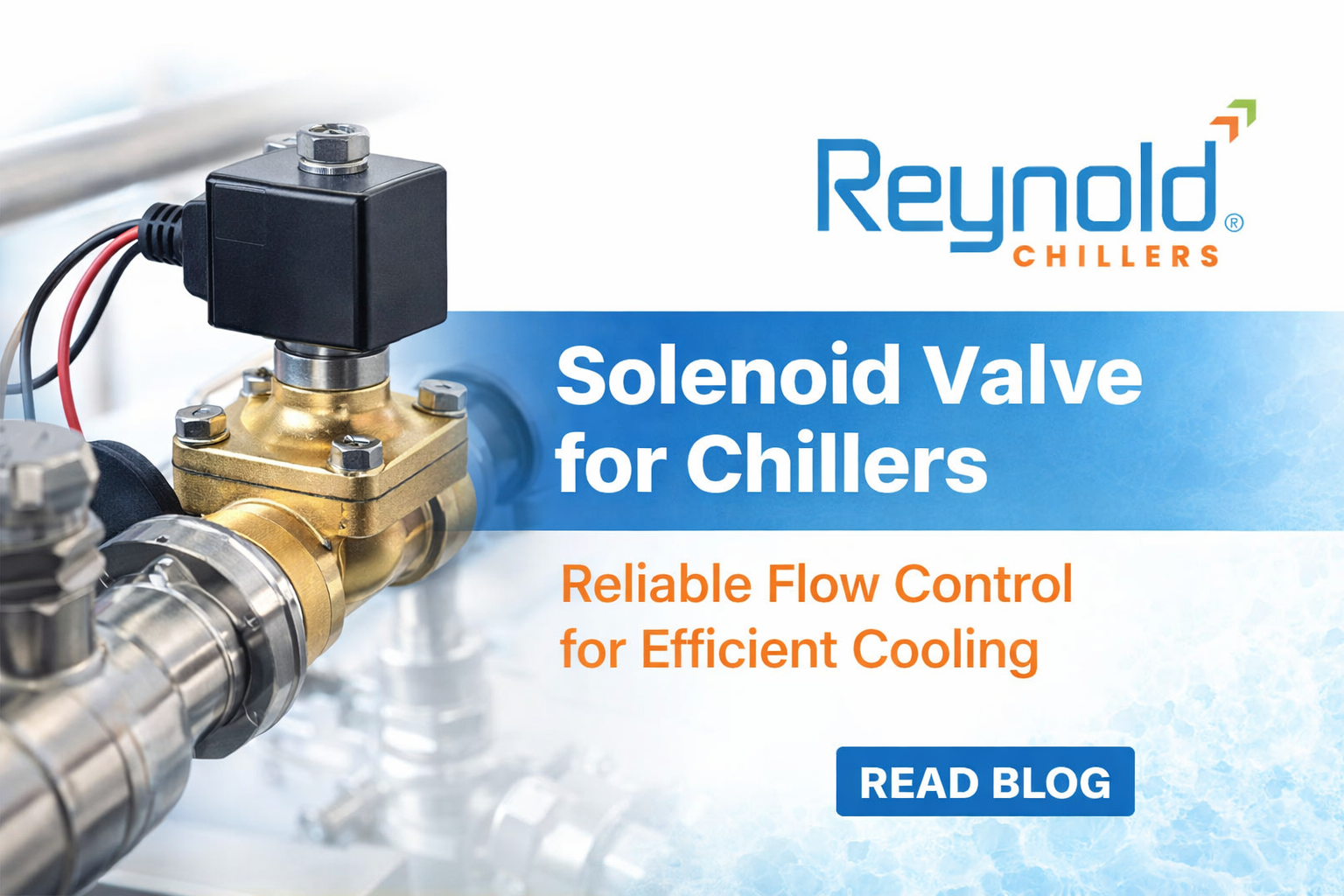
A solenoid valve is an electrically operated valve used to control the flow of liquids or gases. In chillers, it is commonly used to regulate refrigerant flow in different parts of the cooling circuit.

It works through an electromagnetic coil. When electrical power is applied, the coil generates a magnetic field that opens or closes the valve. This allows precise and automatic control without manual intervention.

Role of Solenoid Valve in Chillers

In chiller systems, solenoid valves are typically installed in the liquid line or suction line. Their main functions include:

  • Flow Control: Starts or stops the refrigerant flow based on system requirements
  • System Protection: Prevents unwanted refrigerant migration when the system is off
  • Temperature Regulation: Helps maintain desired cooling levels by controlling refrigerant supply
  • Energy Efficiency: Ensures the system operates only when required, reducing power consumption

Key Features of Solenoid Valves for Chillers

  • High Durability: Designed to withstand pressure, temperature variations, and continuous operation
  • Fast Operation: Instant opening and closing ensures quick response
  • Compact Design: Easy to install in tight spaces within chiller units
  • Corrosion Resistance: Suitable for refrigerants and industrial fluids
  • Leak-Proof Performance: Ensures safe and reliable operation

Types of Solenoid Valves Used in Chillers

Depending on application and system design, different types are used:

1. Direct Acting Solenoid Valve

Used in smaller systems where immediate opening/closing is required without pressure difference.

2. Pilot Operated Solenoid Valve

Ideal for larger chillers where pressure assists in valve operation, ensuring efficient flow control.

3. Normally Closed (NC) Valve

Remains closed when power is off. Most commonly used in chillers for safety.

4. Normally Open (NO) Valve

Remains open when power is off. Used in specific applications where continuous flow is required.

Applications in Industrial Chillers

Solenoid valves are widely used in:

  • Plastic Processing Industries
  • Chemical and Pharmaceutical Plants
  • Food & Beverage Cooling Systems
  • HVAC and Central Cooling Systems
  • Oil & Gas Applications

They ensure smooth operation by controlling refrigerant precisely across different cooling stages.

Why Solenoid Valve Quality Matters

Using a low-quality solenoid valve can lead to:

  • Refrigerant leakage
  • Poor cooling performance
  • Increased energy consumption
  • Frequent maintenance issues

At Reynold India, emphasis is placed on high-quality, industrial-grade solenoid valves that meet demanding operating conditions and deliver long-term reliability.

Maintenance Tips

To ensure optimal performance:

  • Check electrical connections regularly
  • Inspect for leakage or wear
  • Clean internal parts if required
  • Replace damaged coils immediately
  • Ensure proper voltage supply

Regular maintenance increases the lifespan and efficiency of both the valve and the chiller system.

Conclusion

A solenoid valve may seem like a small component, but it plays a vital role in the overall performance of a chiller system. From controlling refrigerant flow to ensuring energy efficiency, it is essential for reliable and safe operation.

Choosing the right solenoid valve not only improves system performance but also reduces downtime and maintenance costs.