





Hydrogen Chiller
Package
Air Cooled upto (-)50 ツーC
- Inverter Driven Variable Speed Capacity Control
- All Wetted Parts of SS 316L
- Inbuilt SS 316L Tank with Stainless steel Primary
& Secondary Pumps - 2 Stage Screw Compressor
- Compact
- Efficient
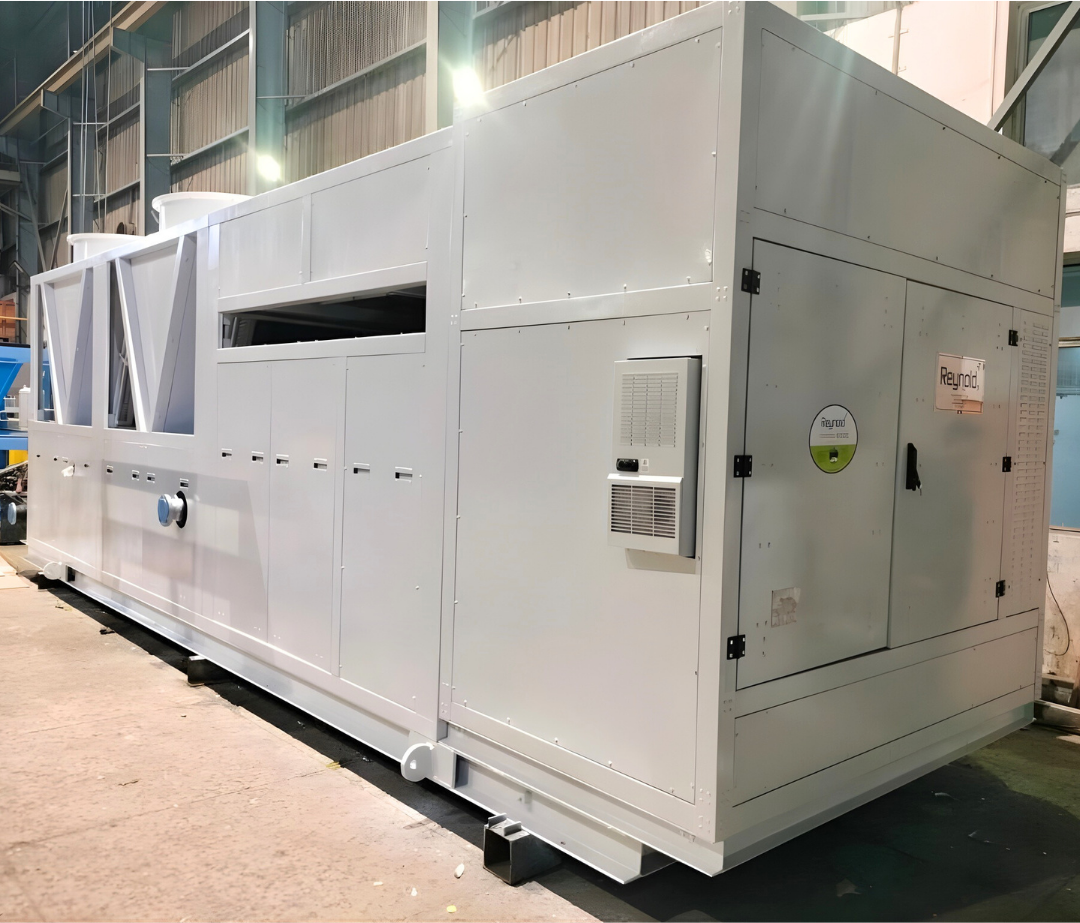
Water Cooled upto (-)50 ツーC








Options...
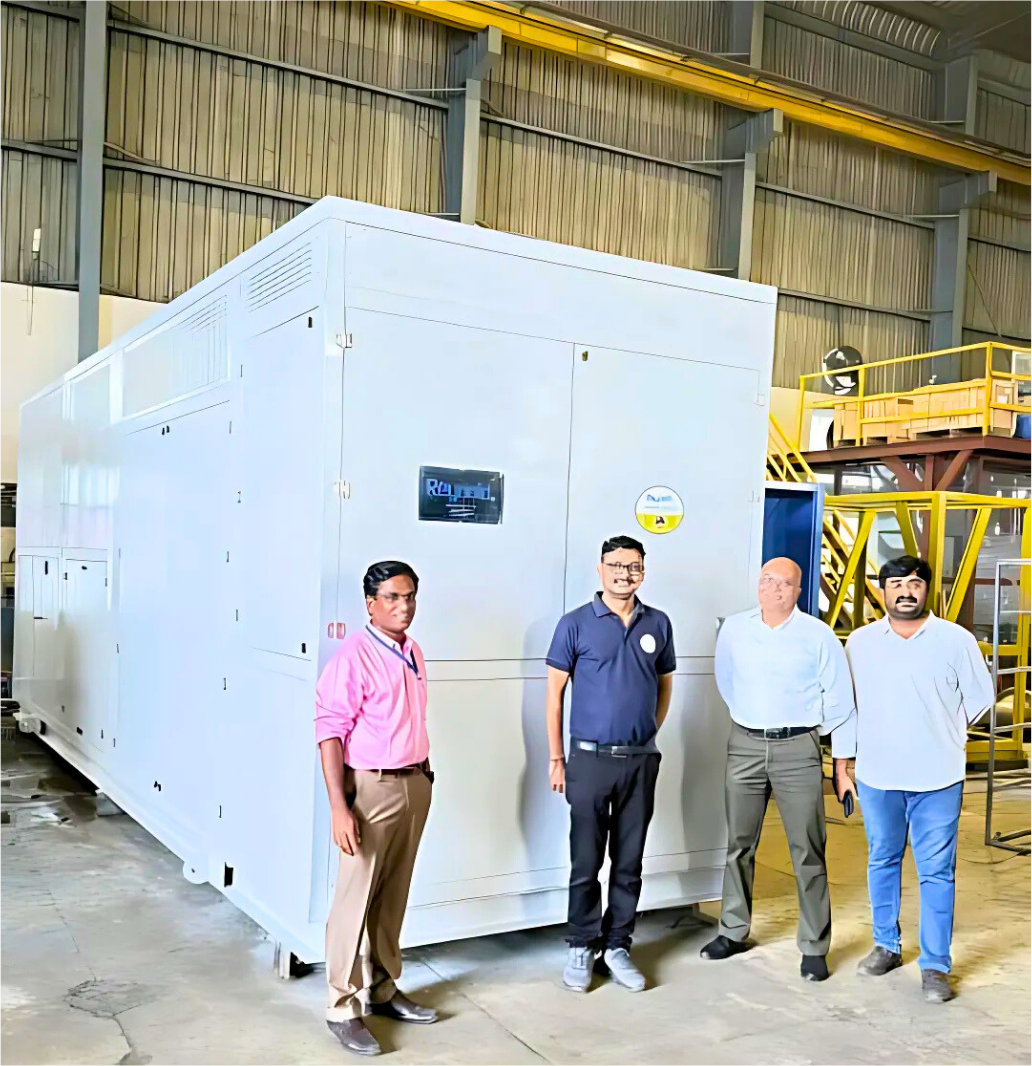
Hydrogen Chiller Package
A Hydrogen Chiller Package is a specialized industrial cooling system designed to provide controlled and reliable cooling for hydrogen production, compression, storage, transportation and refueling applications. Hydrogen-related processes can generate significant heat, and maintaining the required temperature is important for stable operation, equipment protection and process performance.
Reynold India offers Hydrogen Chiller Packages through its Project Division, with customized cooling solutions for the growing hydrogen industry. The company's published Hydrogen Chiller Package is available in both air-cooled and water-cooled configurations, with cooling capability down to -50°C. The package includes inverter-driven variable-speed capacity control, stainless-steel 316L wetted parts, an integrated SS 316L tank, stainless-steel primary and secondary pumps and a two-stage screw compressor.
What Is a Hydrogen Chiller Package?
A Hydrogen Chiller Package is an engineered refrigeration system used to remove heat from hydrogen-related processes or from a secondary cooling circuit connected to the process.
Hydrogen systems can have different cooling requirements depending on whether hydrogen is being produced through electrolysis, compressed for storage, supplied to a refueling station or processed in an industrial facility. Therefore, the chiller needs to be selected according to the actual process temperature, cooling load, flow rate and operating conditions.
Instead of treating the refrigeration unit as a standard chiller, a hydrogen cooling package can be designed as a complete system with refrigeration equipment, pumps, tank, heat exchangers, controls and instrumentation integrated according to the application.
Reynold India lists the Hydrogen Chiller Package as part of its Project Division, alongside specialized solutions such as API Refrigeration Packages, Ammonia Purification Package Systems, Drycooler with Hydraulic Packages and Hazardous Area Chillers for Oil & Gas.
Why Is Cooling Important in Hydrogen Applications?
Temperature management plays an important role throughout the hydrogen value chain.
During hydrogen production, particularly electrolysis, heat is generated by the electrochemical process and associated equipment. Effective cooling helps maintain the operating temperature required by the electrolyzer and its supporting systems.
During hydrogen compression, the gas temperature can increase as pressure rises. Intercooling or aftercooling can therefore be required to manage temperatures and protect downstream equipment.
At hydrogen refueling stations, hydrogen is commonly pre-cooled before fast filling into vehicle storage systems. This helps manage the temperature increase associated with rapid filling.
The exact cooling requirement is different for each application, which is why the refrigeration package should be designed according to the process conditions.
Hydrogen Chiller for Electrolysis
Electrolysis is one of the important technologies used for producing hydrogen from water using electricity. In an electrolyzer, electrical energy drives the electrochemical reaction that separates water into hydrogen and oxygen.
The electrolysis process produces heat, and the electrolyzer system needs appropriate thermal management to maintain its operating conditions.
A hydrogen chiller can be connected to the cooling circuit of the electrolyzer or associated equipment to remove excess heat. Maintaining a stable cooling-fluid temperature can help support consistent operation of the overall hydrogen production system.
For larger hydrogen production plants, cooling-system selection should consider electrolyzer capacity, heat generation, required coolant temperature, flow rate, ambient conditions and operating schedule.
Reynold India also describes specialized hydrogen cooling applications covering electrolyzer cooling, hydrogen gas cooling, compression cooling and hydrogen refueling precooling.
Hydrogen Chiller for Compression
Hydrogen compression is another application where effective cooling can be important.
As hydrogen is compressed, heat is generated. Depending on the compression arrangement, cooling may be required between compression stages or after compression.
A properly designed cooling system can help control the temperature of the compressed gas and associated equipment. The refrigeration package can be integrated with the process through an appropriate secondary cooling circuit.
Reynold India's hydrogen cooling solutions are described for hydrogen compression applications where temperature management is required during the compression process.
Hydrogen Refueling Station Chiller
Hydrogen refueling stations require specialized cooling systems for fast and controlled vehicle refueling.
During rapid hydrogen filling, the gas temperature can rise because of compression and filling dynamics. Pre-cooling the hydrogen before dispensing helps manage this temperature increase.
A dedicated hydrogen refueling chiller can therefore form an important part of a hydrogen fueling station. The required cooling temperature, flow rate, capacity and response time depend on the station design and dispensing requirements.
Reynold India lists Chillers for Hydrogen Filling Stations among its customized chiller solutions.
Air-Cooled and Water-Cooled Hydrogen Chillers
Reynold India's Hydrogen Chiller Package is offered in both air-cooled and water-cooled configurations, with the published temperature capability extending down to -50°C.
- Air-Cooled Hydrogen Chiller: An air-cooled system rejects heat directly to the surrounding air through an air-cooled condenser. It can be useful where cooling-water infrastructure is not available or where an air-cooled design is preferred.
The performance of an air-cooled system depends partly on ambient temperature, so site conditions must be considered during design. - Water-Cooled Hydrogen Chiller: A water-cooled configuration transfers heat to a cooling-water circuit. It can be advantageous for applications with larger cooling requirements and an available cooling-water system.
The choice between air-cooled and water-cooled construction depends on cooling capacity, ambient conditions, water availability, site layout and project requirements.
Key Features of Reynold India Hydrogen Chiller Package
The published Hydrogen Chiller Package includes several features designed for demanding industrial applications.
- Inverter-Driven Variable-Speed Capacity Control: The package uses inverter-driven variable-speed capacity control.
Variable-speed operation can allow the refrigeration system to adjust its capacity according to changing cooling demand instead of operating continuously at a fixed capacity. - SS 316L Wetted Parts: All listed wetted parts are specified as SS 316L.
Material selection is particularly important in hydrogen-related cooling systems because the circulating fluid and process environment must be considered when selecting compatible materials. - Integrated SS 316L Tank: The package includes an inbuilt SS 316L tank, providing an integrated arrangement for the cooling circuit.
An integrated tank can simplify the overall package arrangement and help maintain a controlled volume of circulating cooling fluid. - Stainless-Steel Primary and Secondary Pumps: The package includes stainless-steel primary and secondary pumps.
The pumping arrangement is responsible for circulating the cooling medium through the relevant cooling circuit and connected equipment. - Two-Stage Screw Compressor: Reynold India's published specification identifies a 2-stage screw compressor for the Hydrogen Chiller Package.
The compressor is a central component of the refrigeration cycle and is selected according to the required operating temperature, refrigerant, capacity and pressure conditions.
Temperature Capability
The Hydrogen Chiller Package is published with both air-cooled and water-cooled configurations capable of operating down to -50°C.
The actual leaving-fluid temperature, refrigeration capacity and operating range should always be confirmed based on the final system configuration and process requirements.
A lower-temperature application may require specific consideration of refrigerant selection, insulation, heat exchanger design, compressor operating envelope, piping materials and control strategy.
Certifications and Standards
Hydrogen-related installations can have demanding safety and compliance requirements.
Reynold India's Hydrogen Chiller Package page displays references to ATEX, IECEx, NEMA, UL-US, ASME, CE, PED and UL.
The exact certification applicable to a particular package should be confirmed against the project specification and final equipment configuration. Certifications should not be assumed to apply universally to every model or installation.
Applications of Hydrogen Chiller Package
Hydrogen chillers can be used across different parts of the hydrogen value chain, including:
- Green hydrogen production
- Electrolyzer cooling
- Hydrogen compression
- Hydrogen gas cooling
- Hydrogen refueling stations
- Hydrogen precooling
- Hydrogen storage-related cooling
- Industrial gas processing
- Fuel-cell related applications
- Chemical and petrochemical hydrogen processes
- Research and pilot hydrogen facilities
The final chiller configuration should be selected according to the specific process duty.
Important Parameters for Selecting a Hydrogen Chiller
Selecting a hydrogen chiller requires a detailed understanding of the process.
Important parameters include:
- Required cooling capacity
- Required coolant temperature
- Hydrogen process temperature
- Flow rate
- Heat load
- Ambient temperature
- Air-cooled or water-cooled configuration
- Cooling-medium selection
- Pressure requirements
- Installation environment
- Hazardous-area classification, where applicable
- Electrical supply
- Required certifications
- Control and monitoring requirements
These parameters should be evaluated together rather than selecting a chiller based only on cooling capacity.
Customized Hydrogen Cooling Solutions
Hydrogen applications are still developing rapidly, and different projects can have very different cooling requirements. A small electrolyzer installation, a large green hydrogen plant and a high-throughput hydrogen refueling station will not necessarily require the same chiller design.
Reynold India provides customized hydrogen cooling solutions for applications including hydrogen compression, refueling and electrolysis.
The company's manufacturing facilities follow engineering, fabrication, assembly and testing procedures associated with standards including HTRI, ASME Section VIII/IX, TEMA and ATEX, depending on the equipment and project requirements.
Why Choose Reynold India for Hydrogen Chillers?
Reynold India has been developing industrial cooling and refrigeration solutions since 1995 and operates three manufacturing facilities in India. The company offers industrial chillers as well as customized and project-based refrigeration solutions.
Its Hydrogen Chiller Package forms part of the Project Division and is designed for applications where precise and dependable temperature control is required.
The combination of inverter-driven capacity control, SS 316L wetted components, integrated tank, stainless-steel pumps and two-stage screw compressor provides a package-oriented approach to hydrogen cooling.
Frequently Asked Questions
- What is a Hydrogen Chiller Package? A Hydrogen Chiller Package is a specialized industrial refrigeration system designed to provide controlled cooling for hydrogen production, compression, refueling and other hydrogen-related processes.
- What temperature can the Reynold India Hydrogen Chiller achieve? Reynold India's published Hydrogen Chiller Package is available in air-cooled and water-cooled configurations with temperatures down to -50°C.
- Is the Hydrogen Chiller available in air-cooled and water-cooled versions? Yes. Reynold India lists both air-cooled and water-cooled Hydrogen Chiller Packages.
- What compressor is used? The published package specification includes a 2-stage screw compressor.
- What material is used for the wetted parts? The published specification states that the wetted parts are made of SS 316L and also lists an integrated SS 316L tank with stainless-steel primary and secondary pumps.
- Can Hydrogen Chillers be used for electrolyzer cooling? Yes. Hydrogen cooling systems can be designed for electrolyzer applications where heat generated during hydrogen production needs to be removed and the required operating temperature maintained.
- Can the chiller be used for hydrogen refueling stations? Yes. Dedicated hydrogen cooling and precooling systems can be used for hydrogen refueling applications. Reynold India lists chillers for hydrogen filling stations among its customized chiller solutions.
Get a Hydrogen Chiller Package from Reynold India
A reliable cooling system is an important part of modern hydrogen infrastructure. Whether the requirement is for electrolyzer cooling, hydrogen compression, hydrogen gas cooling or hydrogen refueling, the chiller must be selected according to the actual process conditions and required temperature range.
Reynold India's Hydrogen Chiller Package provides air-cooled and water-cooled configurations down to -50°C, with inverter-driven variable-speed capacity control, SS 316L wetted parts, an integrated SS 316L tank, stainless-steel primary and secondary pumps and a two-stage screw compressor.
For a new hydrogen production plant, electrolyzer project, hydrogen fueling station or industrial hydrogen application, Reynold India can evaluate the required cooling load, temperature, flow, configuration and project requirements to develop a suitable hydrogen cooling solution.